


Nifty arrived with good timing and better marketing.
A polished interface, a wave of influencer mentions, and a sense that it was the modern choice in a category full of clunky older tools.
For a lot of resellers, that was enough to sign up and give it a shot, and to be fair, the first few weeks usually feel great.
Once the honeymoon ends and the scale of the business meets the limits of the software is when people usually end up typing "Nifty alternatives" into a search bar.
If that's where you are, too, you should know that the right replacement can solve several of those limits in one go rather than just trading one headache for another.
Below, we will talk about what tends to put sellers off Nifty, what the best Nifty alternative is, and why Crosslist keeps ending up at the top of that list.
Key takeaways
Nifty is modern and well-designed, but its five US-only marketplaces, inventory cap, credit-metered AI, and lack of a mobile app create significant limitations as your store grows.
Crosslist removes the barrier with 11+ marketplaces across the US, UK, Canada, and Australia, one universal form, an unlimited-listing plan, and full iOS/Android apps.
Crosslist is the strongest alternative in 2026 for sellers who've outgrown Nifty's limits.
Why are people looking for alternatives to Nifty?
The frustrations here accumulate over time until the math stops making sense, and then all at once, you're comparing options on a Sunday night.
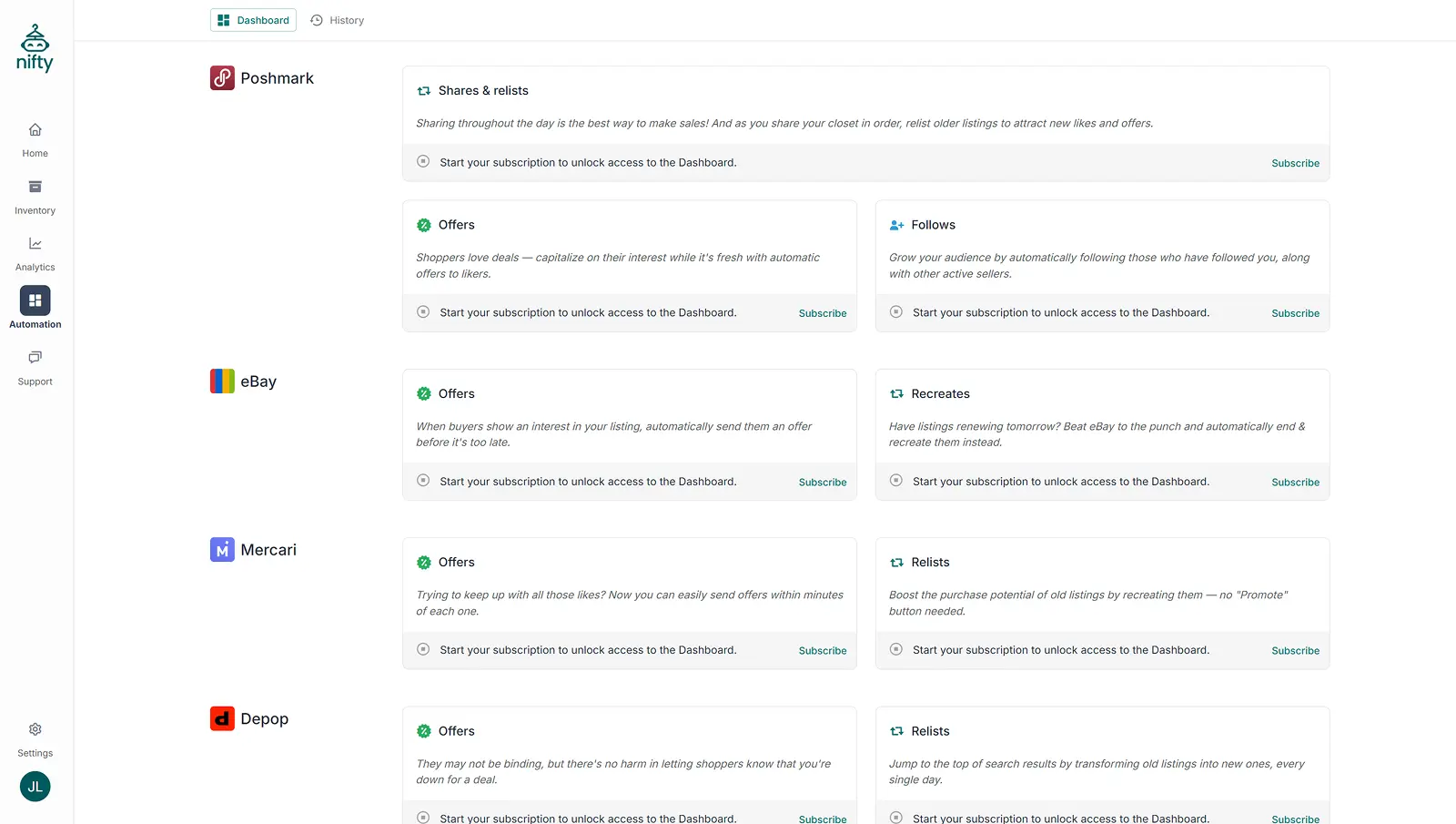
Reach is usually the first problem you'd run into. Nifty connects you to five marketplaces, all of them being inside the United States.
Some of the platforms resellers most want, simply aren't supported, because Nifty's server-side setup doesn't integrate with them.
If you plan to grow beyond a handful of US channels or to ever sell into the UK, Canada, or Australia, you've picked a tool with a direct limitation to that.
Price is the second surprise. Nifty's position on the market is on the premium end, and its base plan caps your inventory at 1,500 listings.
If you ever cross that line, you're handed an extra monthly charge just to keep storing items you already own, which is a strange thing to ask for from a product that is supposed to help you scale.
Then comes the issue nobody enjoys bringing up, which is whether the thing actually stays online.
Some users have described paying for the top package only to see the platform go down seemingly every other day, calling it genuinely detrimental to their business.
That's the sort of complaint that is far more important to consider than any feature list.
Underneath all of that is the workflow itself.
The form looks great, which is part of Nifty's appeal, but it isn't truly dynamic, so you're still working through details, marketplace by marketplace, and your listing speed never really improves as your store grows.
When you find yourself spending more of the evening feeding the tool than actually selling, that's usually a sign that it's time to look elsewhere.
Best Nifty alternatives (ranked)
Here's the lay of the land, with Crosslist leading and the rest sorted by how well they hold up for a seller who's trying to grow an online store:
Crosslist: best overall for reach, mobile, and value
Vendoo: broad and established, heavier to use
List Perfectly: flexible for veterans, dated for newcomers
PrimeLister: excellent for Poshmark, weaker everywhere else
Flyp: cheap and simple, not a tool you scale on
Feature | Crosslist | Nifty | Vendoo | List Perfectly | PrimeLister | Flyp |
One universal form | ✅ | ❌ | ❌ | ❌ | ❌ | ❌ |
Background autoposting | ✅ | ✅ | ⚠️ | ❌ | ⚠️ | ⚠️ |
Update without relisting | ✅ | ❌ | ⚠️ | ⚠️ | ⚠️ | ⚠️ |
Bulk editing | ✅ | ✅ | ✅ | ⚠️ | ⚠️ | ❌ |
Auto-delist | ✅ | ✅ | ✅ | ⚠️ | ⚠️ | ⚠️ |
AI listing creation | ✅ | ✅ | ✅ | ⚠️ | ❌ | ❌ |
Mobile app | ✅ | ❌ | ✅ | ⚠️ | ❌ | ⚠️ |
Marketplaces | 11+ | 5 | 11 | 11 | 8 | 6 |
Pricing and features change often, and the table above shows what was publicly listed in early 2026. Check each provider's own page before you commit.
Best Nifty alternative: Crosslist

Crosslist is the best Nifty alternative for resellers who want to reach more buyers, work faster, and grow without being charged extra for the privilege.
In short, wherever Nifty draws a boundary, Crosslist tends to remove one. Here's where that comes up in practice.
More marketplaces and more countries to sell in
This belongs at the top because it's Nifty's biggest weakness. Nifty connects you to five marketplaces, all US-only.
Crosslist supports 11+, including Grailed, Whatnot, Shopify, TikTok Shop and more across the US, the UK, Canada, and Australia.
Every extra marketplace is a new pool of buyers who would never have seen your inventory on the channels you already use, and that extended reach is the whole point of cross listing in the first place.
One genuinely dynamic form
Nifty's form is pleasant to look at, but it still requires you to work through details, marketplace by marketplace, which means the same brand, the same size, the same category, re-entered for every platform you post to.
Crosslist gives you a single universal form that adapts to show only the fields each chosen marketplace requires, so you enter your details once, and the listing goes everywhere.
At ten items a week, that's convenience; at a few hundred a month, it's the difference between a manageable workflow and duplicate busywork.
Autodelist that catches a sale before you double-sell
Sell the same item twice and you know how it goes: a cancelled order, a refund, an annoyed buyer, and sometimes a strike on your account.
The more marketplaces you list on, the easier it is to miss.
That is what autodelist is for. When something sells on one channel, the tool pulls it from the others before a second buyer can grab it.
Nifty does offer it, but sellers have also flagged that it doesn't always work, which is the last thing you want from a feature whose whole job is to react the moment an item sells.
Crosslist includes Autodelist on its Gold plan at $39.99, its most popular tier.
Make a sale, and the listing comes down everywhere else, so the protection that actually prevents double-selling sits well below where Nifty gates it.
A real mobile app, not a website on a small screen
How about one feature Nifty doesn't have at all, like a native app? Managing your store on Nifty using a phone means opening a clunky mobile browser and going to the website.
Crosslist ships full iOS and Android apps that let you create listings, post to all 11+ marketplaces, import inventory, and relist straight from your phone.
This is a huge upside if you source your inventory at thrift stores and estate sales and would rather list an item standing in the aisle than carry home another pile of admin.
AI listings, plus background removal that's never capped
Nifty runs its AI on Smart Credits, so every generated listing and photo background removal draws down a balance you'll eventually have to refill.
That quietly changes how freely you use a feature you're already paying for. Once those credits run out mid-session, you either buy more or finish by hand.
Crosslist offers its AI tools as a low-cost add-on.
The AI listing generator builds the whole listing from a single photo (title, description, attributes, even a suggested price drawn from the latest market data).
For bigger hauls, AI bulk create takes a batch of photos and groups them into separate listings automatically, then completes the full details for the marketplaces you choose.
You only need review a ready-made batch instead of building each listing from scratch.
It also includes an AI photo editor that can edit or generate images from an AI prompt, plus unlimited background removal on every plan.
So the cleanup step you reach for on almost every item never runs your credits down.
Edits that go live without relisting
Want to trim a price or fix a typo on your listings?
Crosslist lets you push the change and updates the live listing directly without needing you to delete and repost.
This means you keep the search ranking and watch history an item has already built up rather than starting it over from zero.
Bulk tools, smart organization, and room to scale
Edit in bulk, adjust prices, import and export your catalog by CSV, and keep the whole thing tidy with smart organization and reusable listing templates.
When your catalog outgrows a cap, the Diamond plan lifts the listing limit entirely, so there's no 1,500-item ceiling waiting to spring an add-on fee the way Nifty's does.
That's precisely the trap that sends a lot of growing Nifty sellers looking elsewhere in the first place.
Pricing
When it comes to the cost, the comparison is very simple: Crosslist comes out up to 17% cheaper than Nifty while supporting more marketplaces in more countries.
Crosslist pricing starts at $29.99/month up to $44.99/month for unlimited listings, compared to Nifty's $39.99/month base that still limits inventory and adds $20 for a larger closet.
First purchases come with a 3-day money-back guarantee, so testing the whole thing costs you nothing if it isn't a fit.
Vendoo
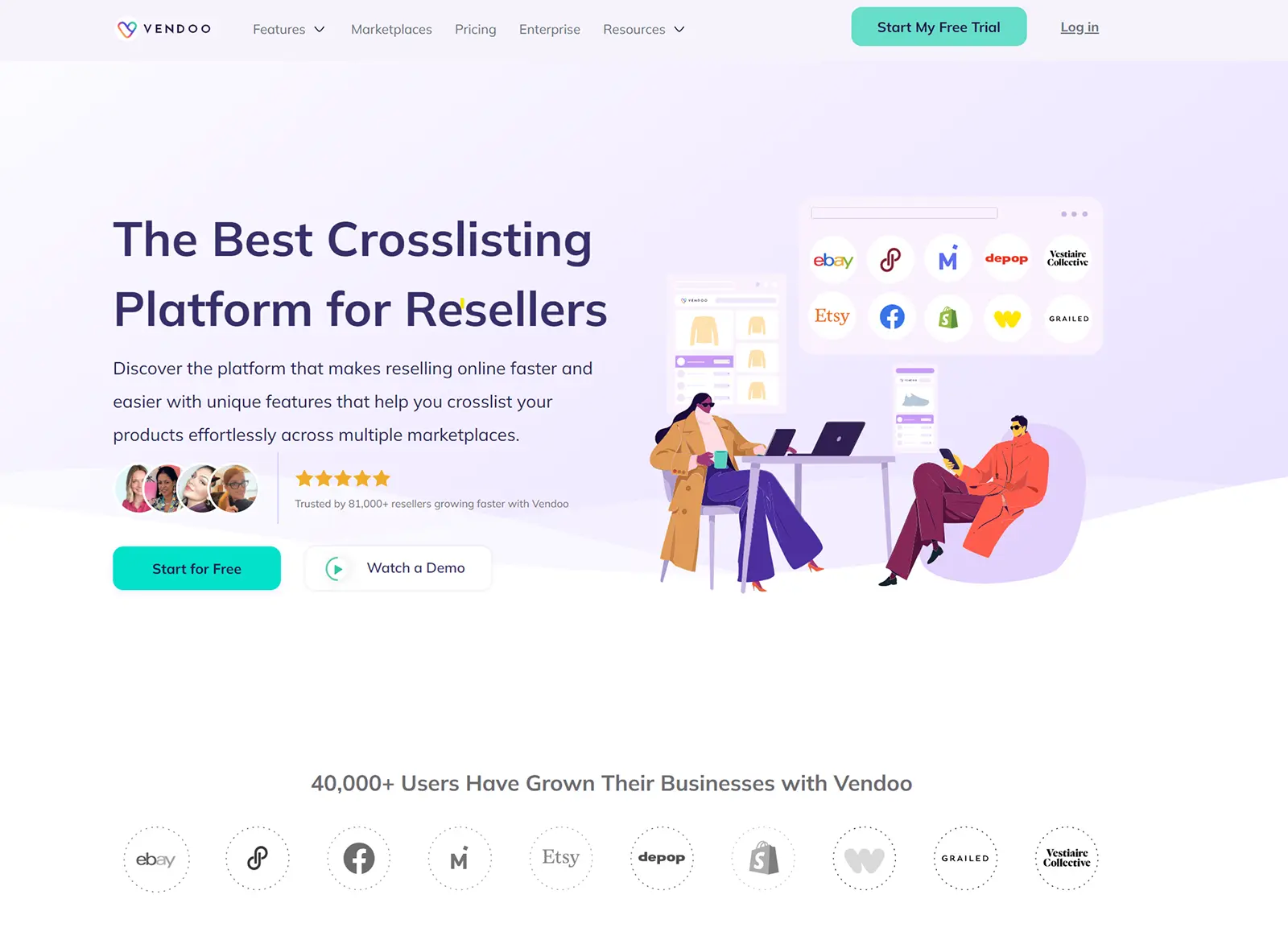
One of the most recognized names in the category, with wide marketplace coverage, a working mobile app, and reasonable value since its pricing refresh.
While still a good choice, its workflow is not as refreshing since there's no universal form, so you need to complete a separate one for every marketplace.
Once you do, the details don't always carry over perfectly, which turns into real repetition once you're listing in volume.
There are also long-running reliability complaints around Mercari specifically. It's a dependable, familiar choice; it just asks more of your hands than a newer workflow does.
List Perfectly

List Perfectly has been at this longer than almost any other tool, and its loyal user base sticks around for a reason: if you want to control every detail by hand, few tools give you more rope.
The catch is that "by hand" is fairly literal. You move between tabs to get a listing live, the look and feel haven't kept pace with newer software, and category data has a habit of not landing where it should when it jumps platforms.
True automation, like sale detection, only comes on the $99+ Pro Plus plan, and there's no annual billing to soften the monthly hit.
It's a capable tool for someone who enjoys the manual craft of listing, and a slow one for anyone who'd rather the software handled it.
PrimeLister
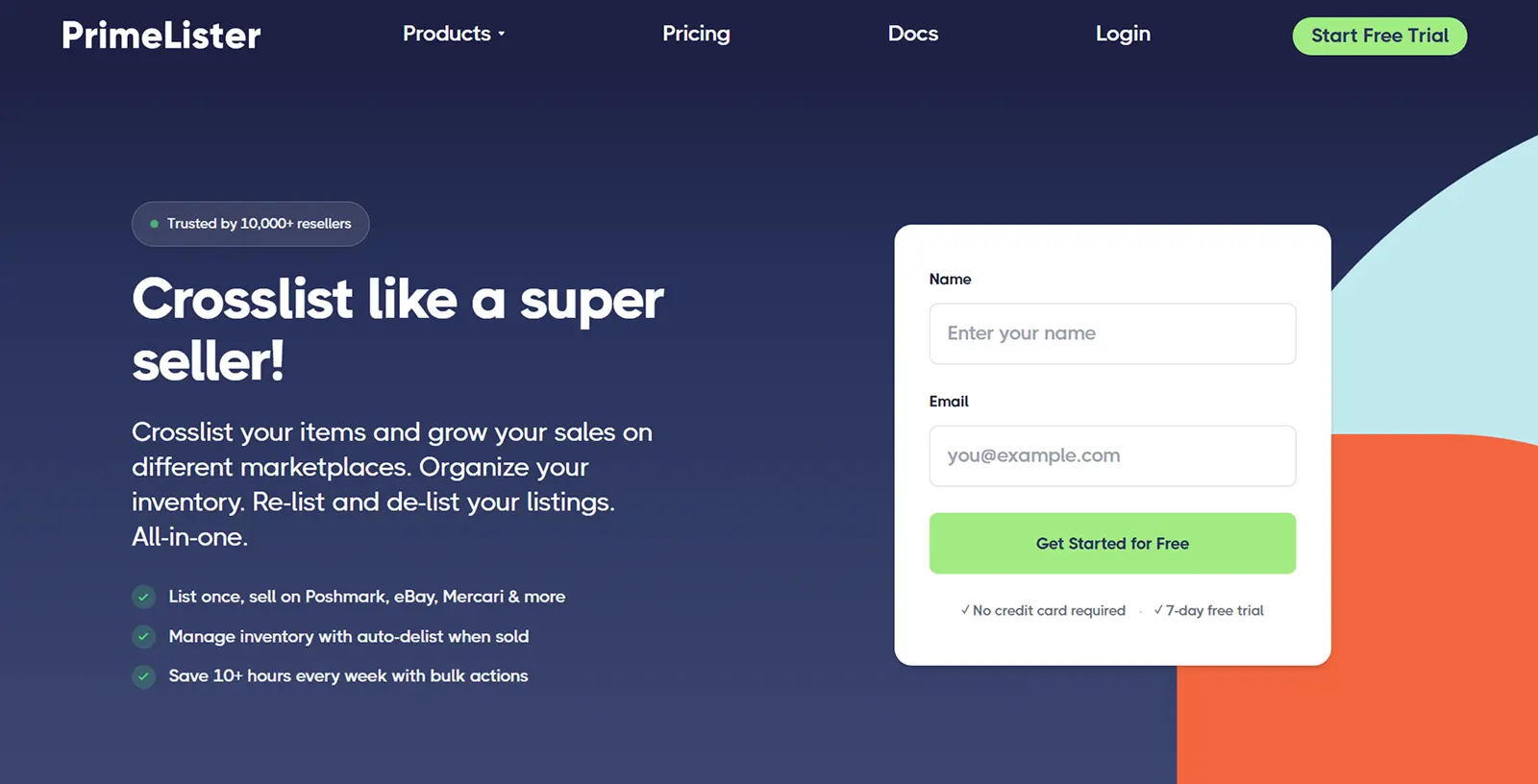
PrimeLister isn't really a Nifty competitor so much as a Poshmark specialist that also cross lists.
The catch is where the automation runs: Nifty is cloud-based and works while your laptop's closed, while PrimeLister relies on your browser.
Sellers have reported having to keep a tab open and active for it to work at all. It's genuinely good for Poshmark sharing, offers, and follows.
As your main tool for multiple marketplaces, it can be limited, with lighter inventory management than the bigger platforms.
It costs $49.99/month, or $33.33 billed yearly, and has no UK support.
Flyp

Flyp lets you skip listing entirely and allows you to hand a box of clothes to a vetted "Pro" who prices, lists, and ships everything for a cut of the sale.
Very convenient if you just want some items gone. Flyp also has a $9/month self-serve cross lister, but it's far more basic.
It works through your browser, opening a separate tab for each marketplace, and one tester trying to upload 30 items at once ended up with 90 open tabs and a crashed computer.
Next to Nifty's cloud automation, it's not really competing in the same space.
Which Nifty alternative is best?
Where do you want your store to be in a year?
If you're content selling on two or three US marketplaces and you like the way Nifty looks, there's a reasonable case for staying put.
Most people who go looking for alternatives, though, are already past that stage, and they need a tool that won't make them shop around again a year from now.
For those sellers, Crosslist is clearly the answer because:
It reaches 11+ marketplaces, including the US, UK, Canada, and Australia.
It runs on one dynamic form instead of a separate one per marketplace
It offers an unlimited-listing plan with no closet add-on fees.
It has a mobile app, so the whole operation fits in your pocket
Nifty definitely has its place in the cross listing market. But if you want a broader reach, an actual mobile app, and better value without a credit meter ticking in the background, Crosslist is the best Nifty alternative to choose in 2026.
Try Crosslist risk-free with our 3-day money-back guarantee and see the difference for yourself.
FAQ
How much does Nifty cost in 2026?
Nifty's Cross listing plan costs $39.99/month, with an extra $20/month once you pass 1,500 listings. The automation bundle costs $69.99/month.
By comparison, Crosslist starts at $29.99/month and lifts the listing cap entirely on its $44.99 Diamond plan.
Does Nifty work outside the United States?
Nifty is US-only. If you sell in the UK, Canada, or Australia, you'll need an alternative like Crosslist, which works in all four countries.
Does Nifty have a mobile app?
It doesn't. Nifty is only usable through a phone's web browser, whereas Crosslist offers full native iOS and Android apps for listing, posting, and managing inventory anywhere.
Is it safe to connect cross listing tools to my marketplace accounts?
Most popular tools connect without ever taking your password, through official marketplace APIs or a secure extension.
Crosslist uses the API wherever one exists, which is generally the more stable route.
Nifty arrived with good timing and better marketing.
A polished interface, a wave of influencer mentions, and a sense that it was the modern choice in a category full of clunky older tools.
For a lot of resellers, that was enough to sign up and give it a shot, and to be fair, the first few weeks usually feel great.
Once the honeymoon ends and the scale of the business meets the limits of the software is when people usually end up typing "Nifty alternatives" into a search bar.
If that's where you are, too, you should know that the right replacement can solve several of those limits in one go rather than just trading one headache for another.
Below, we will talk about what tends to put sellers off Nifty, what the best Nifty alternative is, and why Crosslist keeps ending up at the top of that list.
Key takeaways
Nifty is modern and well-designed, but its five US-only marketplaces, inventory cap, credit-metered AI, and lack of a mobile app create significant limitations as your store grows.
Crosslist removes the barrier with 11+ marketplaces across the US, UK, Canada, and Australia, one universal form, an unlimited-listing plan, and full iOS/Android apps.
Crosslist is the strongest alternative in 2026 for sellers who've outgrown Nifty's limits.
Why are people looking for alternatives to Nifty?
The frustrations here accumulate over time until the math stops making sense, and then all at once, you're comparing options on a Sunday night.
Reach is usually the first problem you'd run into. Nifty connects you to five marketplaces, all of them being inside the United States.
Some of the platforms resellers most want, simply aren't supported, because Nifty's server-side setup doesn't integrate with them.
If you plan to grow beyond a handful of US channels or to ever sell into the UK, Canada, or Australia, you've picked a tool with a direct limitation to that.
Price is the second surprise. Nifty's position on the market is on the premium end, and its base plan caps your inventory at 1,500 listings.
If you ever cross that line, you're handed an extra monthly charge just to keep storing items you already own, which is a strange thing to ask for from a product that is supposed to help you scale.
Then comes the issue nobody enjoys bringing up, which is whether the thing actually stays online.
Some users have described paying for the top package only to see the platform go down seemingly every other day, calling it genuinely detrimental to their business.
That's the sort of complaint that is far more important to consider than any feature list.
Underneath all of that is the workflow itself.
The form looks great, which is part of Nifty's appeal, but it isn't truly dynamic, so you're still working through details, marketplace by marketplace, and your listing speed never really improves as your store grows.
When you find yourself spending more of the evening feeding the tool than actually selling, that's usually a sign that it's time to look elsewhere.
Best Nifty alternatives (ranked)
Here's the lay of the land, with Crosslist leading and the rest sorted by how well they hold up for a seller who's trying to grow an online store:
Crosslist: best overall for reach, mobile, and value
Vendoo: broad and established, heavier to use
List Perfectly: flexible for veterans, dated for newcomers
PrimeLister: excellent for Poshmark, weaker everywhere else
Flyp: cheap and simple, not a tool you scale on
Feature | Crosslist | Nifty | Vendoo | List Perfectly | PrimeLister | Flyp |
One universal form | ✅ | ❌ | ❌ | ❌ | ❌ | ❌ |
Background autoposting | ✅ | ✅ | ⚠️ | ❌ | ⚠️ | ⚠️ |
Update without relisting | ✅ | ❌ | ⚠️ | ⚠️ | ⚠️ | ⚠️ |
Bulk editing | ✅ | ✅ | ✅ | ⚠️ | ⚠️ | ❌ |
Auto-delist | ✅ | ✅ | ✅ | ⚠️ | ⚠️ | ⚠️ |
AI listing creation | ✅ | ✅ | ✅ | ⚠️ | ❌ | ❌ |
Mobile app | ✅ | ❌ | ✅ | ⚠️ | ❌ | ⚠️ |
Marketplaces | 11+ | 5 | 11 | 11 | 8 | 6 |
Pricing and features change often, and the table above shows what was publicly listed in early 2026. Check each provider's own page before you commit.
Best Nifty alternative: Crosslist
Crosslist is the best Nifty alternative for resellers who want to reach more buyers, work faster, and grow without being charged extra for the privilege.
In short, wherever Nifty draws a boundary, Crosslist tends to remove one. Here's where that comes up in practice.
More marketplaces and more countries to sell in
This belongs at the top because it's Nifty's biggest weakness. Nifty connects you to five marketplaces, all US-only.
Crosslist supports 11+, including Grailed, Whatnot, Shopify, TikTok Shop and more across the US, the UK, Canada, and Australia.
Every extra marketplace is a new pool of buyers who would never have seen your inventory on the channels you already use, and that extended reach is the whole point of cross listing in the first place.
One genuinely dynamic form
Nifty's form is pleasant to look at, but it still requires you to work through details, marketplace by marketplace, which means the same brand, the same size, the same category, re-entered for every platform you post to.
Crosslist gives you a single universal form that adapts to show only the fields each chosen marketplace requires, so you enter your details once, and the listing goes everywhere.
At ten items a week, that's convenience; at a few hundred a month, it's the difference between a manageable workflow and duplicate busywork.
Autodelist that catches a sale before you double-sell
Sell the same item twice and you know how it goes: a cancelled order, a refund, an annoyed buyer, and sometimes a strike on your account.
The more marketplaces you list on, the easier it is to miss.
That is what autodelist is for. When something sells on one channel, the tool pulls it from the others before a second buyer can grab it.
Nifty does offer it, but sellers have also flagged that it doesn't always work, which is the last thing you want from a feature whose whole job is to react the moment an item sells.
Crosslist includes Autodelist on its Gold plan at $39.99, its most popular tier.
Make a sale, and the listing comes down everywhere else, so the protection that actually prevents double-selling sits well below where Nifty gates it.
A real mobile app, not a website on a small screen
How about one feature Nifty doesn't have at all, like a native app? Managing your store on Nifty using a phone means opening a clunky mobile browser and going to the website.
Crosslist ships full iOS and Android apps that let you create listings, post to all 11+ marketplaces, import inventory, and relist straight from your phone.
This is a huge upside if you source your inventory at thrift stores and estate sales and would rather list an item standing in the aisle than carry home another pile of admin.
AI listings, plus background removal that's never capped
Nifty runs its AI on Smart Credits, so every generated listing and photo background removal draws down a balance you'll eventually have to refill.
That quietly changes how freely you use a feature you're already paying for. Once those credits run out mid-session, you either buy more or finish by hand.
Crosslist offers its AI tools as a low-cost add-on.
The AI listing generator builds the whole listing from a single photo (title, description, attributes, even a suggested price drawn from the latest market data).
For bigger hauls, AI bulk create takes a batch of photos and groups them into separate listings automatically, then completes the full details for the marketplaces you choose.
You only need review a ready-made batch instead of building each listing from scratch.
It also includes an AI photo editor that can edit or generate images from an AI prompt, plus unlimited background removal on every plan.
So the cleanup step you reach for on almost every item never runs your credits down.
Edits that go live without relisting
Want to trim a price or fix a typo on your listings?
Crosslist lets you push the change and updates the live listing directly without needing you to delete and repost.
This means you keep the search ranking and watch history an item has already built up rather than starting it over from zero.
Bulk tools, smart organization, and room to scale
Edit in bulk, adjust prices, import and export your catalog by CSV, and keep the whole thing tidy with smart organization and reusable listing templates.
When your catalog outgrows a cap, the Diamond plan lifts the listing limit entirely, so there's no 1,500-item ceiling waiting to spring an add-on fee the way Nifty's does.
That's precisely the trap that sends a lot of growing Nifty sellers looking elsewhere in the first place.
Pricing
When it comes to the cost, the comparison is very simple: Crosslist comes out up to 17% cheaper than Nifty while supporting more marketplaces in more countries.
Crosslist pricing starts at $29.99/month up to $44.99/month for unlimited listings, compared to Nifty's $39.99/month base that still limits inventory and adds $20 for a larger closet.
First purchases come with a 3-day money-back guarantee, so testing the whole thing costs you nothing if it isn't a fit.
Vendoo
One of the most recognized names in the category, with wide marketplace coverage, a working mobile app, and reasonable value since its pricing refresh.
While still a good choice, its workflow is not as refreshing since there's no universal form, so you need to complete a separate one for every marketplace.
Once you do, the details don't always carry over perfectly, which turns into real repetition once you're listing in volume.
There are also long-running reliability complaints around Mercari specifically. It's a dependable, familiar choice; it just asks more of your hands than a newer workflow does.
List Perfectly
List Perfectly has been at this longer than almost any other tool, and its loyal user base sticks around for a reason: if you want to control every detail by hand, few tools give you more rope.
The catch is that "by hand" is fairly literal. You move between tabs to get a listing live, the look and feel haven't kept pace with newer software, and category data has a habit of not landing where it should when it jumps platforms.
True automation, like sale detection, only comes on the $99+ Pro Plus plan, and there's no annual billing to soften the monthly hit.
It's a capable tool for someone who enjoys the manual craft of listing, and a slow one for anyone who'd rather the software handled it.
PrimeLister
PrimeLister isn't really a Nifty competitor so much as a Poshmark specialist that also cross lists.
The catch is where the automation runs: Nifty is cloud-based and works while your laptop's closed, while PrimeLister relies on your browser.
Sellers have reported having to keep a tab open and active for it to work at all. It's genuinely good for Poshmark sharing, offers, and follows.
As your main tool for multiple marketplaces, it can be limited, with lighter inventory management than the bigger platforms.
It costs $49.99/month, or $33.33 billed yearly, and has no UK support.
Flyp
Flyp lets you skip listing entirely and allows you to hand a box of clothes to a vetted "Pro" who prices, lists, and ships everything for a cut of the sale.
Very convenient if you just want some items gone. Flyp also has a $9/month self-serve cross lister, but it's far more basic.
It works through your browser, opening a separate tab for each marketplace, and one tester trying to upload 30 items at once ended up with 90 open tabs and a crashed computer.
Next to Nifty's cloud automation, it's not really competing in the same space.
Which Nifty alternative is best?
Where do you want your store to be in a year?
If you're content selling on two or three US marketplaces and you like the way Nifty looks, there's a reasonable case for staying put.
Most people who go looking for alternatives, though, are already past that stage, and they need a tool that won't make them shop around again a year from now.
For those sellers, Crosslist is clearly the answer because:
It reaches 11+ marketplaces, including the US, UK, Canada, and Australia.
It runs on one dynamic form instead of a separate one per marketplace
It offers an unlimited-listing plan with no closet add-on fees.
It has a mobile app, so the whole operation fits in your pocket
Nifty definitely has its place in the cross listing market. But if you want a broader reach, an actual mobile app, and better value without a credit meter ticking in the background, Crosslist is the best Nifty alternative to choose in 2026.
Try Crosslist risk-free with our 3-day money-back guarantee and see the difference for yourself.
FAQ
How much does Nifty cost in 2026?
Nifty's Cross listing plan costs $39.99/month, with an extra $20/month once you pass 1,500 listings. The automation bundle costs $69.99/month.
By comparison, Crosslist starts at $29.99/month and lifts the listing cap entirely on its $44.99 Diamond plan.
Does Nifty work outside the United States?
Nifty is US-only. If you sell in the UK, Canada, or Australia, you'll need an alternative like Crosslist, which works in all four countries.
Does Nifty have a mobile app?
It doesn't. Nifty is only usable through a phone's web browser, whereas Crosslist offers full native iOS and Android apps for listing, posting, and managing inventory anywhere.
Is it safe to connect cross listing tools to my marketplace accounts?
Most popular tools connect without ever taking your password, through official marketplace APIs or a secure extension.
Crosslist uses the API wherever one exists, which is generally the more stable route.
Nifty arrived with good timing and better marketing.
A polished interface, a wave of influencer mentions, and a sense that it was the modern choice in a category full of clunky older tools.
For a lot of resellers, that was enough to sign up and give it a shot, and to be fair, the first few weeks usually feel great.
Once the honeymoon ends and the scale of the business meets the limits of the software is when people usually end up typing "Nifty alternatives" into a search bar.
If that's where you are, too, you should know that the right replacement can solve several of those limits in one go rather than just trading one headache for another.
Below, we will talk about what tends to put sellers off Nifty, what the best Nifty alternative is, and why Crosslist keeps ending up at the top of that list.
Key takeaways
Nifty is modern and well-designed, but its five US-only marketplaces, inventory cap, credit-metered AI, and lack of a mobile app create significant limitations as your store grows.
Crosslist removes the barrier with 11+ marketplaces across the US, UK, Canada, and Australia, one universal form, an unlimited-listing plan, and full iOS/Android apps.
Crosslist is the strongest alternative in 2026 for sellers who've outgrown Nifty's limits.
Why are people looking for alternatives to Nifty?
The frustrations here accumulate over time until the math stops making sense, and then all at once, you're comparing options on a Sunday night.
Reach is usually the first problem you'd run into. Nifty connects you to five marketplaces, all of them being inside the United States.
Some of the platforms resellers most want, simply aren't supported, because Nifty's server-side setup doesn't integrate with them.
If you plan to grow beyond a handful of US channels or to ever sell into the UK, Canada, or Australia, you've picked a tool with a direct limitation to that.
Price is the second surprise. Nifty's position on the market is on the premium end, and its base plan caps your inventory at 1,500 listings.
If you ever cross that line, you're handed an extra monthly charge just to keep storing items you already own, which is a strange thing to ask for from a product that is supposed to help you scale.
Then comes the issue nobody enjoys bringing up, which is whether the thing actually stays online.
Some users have described paying for the top package only to see the platform go down seemingly every other day, calling it genuinely detrimental to their business.
That's the sort of complaint that is far more important to consider than any feature list.
Underneath all of that is the workflow itself.
The form looks great, which is part of Nifty's appeal, but it isn't truly dynamic, so you're still working through details, marketplace by marketplace, and your listing speed never really improves as your store grows.
When you find yourself spending more of the evening feeding the tool than actually selling, that's usually a sign that it's time to look elsewhere.
Best Nifty alternatives (ranked)
Here's the lay of the land, with Crosslist leading and the rest sorted by how well they hold up for a seller who's trying to grow an online store:
Crosslist: best overall for reach, mobile, and value
Vendoo: broad and established, heavier to use
List Perfectly: flexible for veterans, dated for newcomers
PrimeLister: excellent for Poshmark, weaker everywhere else
Flyp: cheap and simple, not a tool you scale on
Feature | Crosslist | Nifty | Vendoo | List Perfectly | PrimeLister | Flyp |
One universal form | ✅ | ❌ | ❌ | ❌ | ❌ | ❌ |
Background autoposting | ✅ | ✅ | ⚠️ | ❌ | ⚠️ | ⚠️ |
Update without relisting | ✅ | ❌ | ⚠️ | ⚠️ | ⚠️ | ⚠️ |
Bulk editing | ✅ | ✅ | ✅ | ⚠️ | ⚠️ | ❌ |
Auto-delist | ✅ | ✅ | ✅ | ⚠️ | ⚠️ | ⚠️ |
AI listing creation | ✅ | ✅ | ✅ | ⚠️ | ❌ | ❌ |
Mobile app | ✅ | ❌ | ✅ | ⚠️ | ❌ | ⚠️ |
Marketplaces | 11+ | 5 | 11 | 11 | 8 | 6 |
Pricing and features change often, and the table above shows what was publicly listed in early 2026. Check each provider's own page before you commit.
Best Nifty alternative: Crosslist
Crosslist is the best Nifty alternative for resellers who want to reach more buyers, work faster, and grow without being charged extra for the privilege.
In short, wherever Nifty draws a boundary, Crosslist tends to remove one. Here's where that comes up in practice.
More marketplaces and more countries to sell in
This belongs at the top because it's Nifty's biggest weakness. Nifty connects you to five marketplaces, all US-only.
Crosslist supports 11+, including Grailed, Whatnot, Shopify, TikTok Shop and more across the US, the UK, Canada, and Australia.
Every extra marketplace is a new pool of buyers who would never have seen your inventory on the channels you already use, and that extended reach is the whole point of cross listing in the first place.
One genuinely dynamic form
Nifty's form is pleasant to look at, but it still requires you to work through details, marketplace by marketplace, which means the same brand, the same size, the same category, re-entered for every platform you post to.
Crosslist gives you a single universal form that adapts to show only the fields each chosen marketplace requires, so you enter your details once, and the listing goes everywhere.
At ten items a week, that's convenience; at a few hundred a month, it's the difference between a manageable workflow and duplicate busywork.
Autodelist that catches a sale before you double-sell
Sell the same item twice and you know how it goes: a cancelled order, a refund, an annoyed buyer, and sometimes a strike on your account.
The more marketplaces you list on, the easier it is to miss.
That is what autodelist is for. When something sells on one channel, the tool pulls it from the others before a second buyer can grab it.
Nifty does offer it, but sellers have also flagged that it doesn't always work, which is the last thing you want from a feature whose whole job is to react the moment an item sells.
Crosslist includes Autodelist on its Gold plan at $39.99, its most popular tier.
Make a sale, and the listing comes down everywhere else, so the protection that actually prevents double-selling sits well below where Nifty gates it.
A real mobile app, not a website on a small screen
How about one feature Nifty doesn't have at all, like a native app? Managing your store on Nifty using a phone means opening a clunky mobile browser and going to the website.
Crosslist ships full iOS and Android apps that let you create listings, post to all 11+ marketplaces, import inventory, and relist straight from your phone.
This is a huge upside if you source your inventory at thrift stores and estate sales and would rather list an item standing in the aisle than carry home another pile of admin.
AI listings, plus background removal that's never capped
Nifty runs its AI on Smart Credits, so every generated listing and photo background removal draws down a balance you'll eventually have to refill.
That quietly changes how freely you use a feature you're already paying for. Once those credits run out mid-session, you either buy more or finish by hand.
Crosslist offers its AI tools as a low-cost add-on.
The AI listing generator builds the whole listing from a single photo (title, description, attributes, even a suggested price drawn from the latest market data).
For bigger hauls, AI bulk create takes a batch of photos and groups them into separate listings automatically, then completes the full details for the marketplaces you choose.
You only need review a ready-made batch instead of building each listing from scratch.
It also includes an AI photo editor that can edit or generate images from an AI prompt, plus unlimited background removal on every plan.
So the cleanup step you reach for on almost every item never runs your credits down.
Edits that go live without relisting
Want to trim a price or fix a typo on your listings?
Crosslist lets you push the change and updates the live listing directly without needing you to delete and repost.
This means you keep the search ranking and watch history an item has already built up rather than starting it over from zero.
Bulk tools, smart organization, and room to scale
Edit in bulk, adjust prices, import and export your catalog by CSV, and keep the whole thing tidy with smart organization and reusable listing templates.
When your catalog outgrows a cap, the Diamond plan lifts the listing limit entirely, so there's no 1,500-item ceiling waiting to spring an add-on fee the way Nifty's does.
That's precisely the trap that sends a lot of growing Nifty sellers looking elsewhere in the first place.
Pricing
When it comes to the cost, the comparison is very simple: Crosslist comes out up to 17% cheaper than Nifty while supporting more marketplaces in more countries.
Crosslist pricing starts at $29.99/month up to $44.99/month for unlimited listings, compared to Nifty's $39.99/month base that still limits inventory and adds $20 for a larger closet.
First purchases come with a 3-day money-back guarantee, so testing the whole thing costs you nothing if it isn't a fit.
Vendoo
One of the most recognized names in the category, with wide marketplace coverage, a working mobile app, and reasonable value since its pricing refresh.
While still a good choice, its workflow is not as refreshing since there's no universal form, so you need to complete a separate one for every marketplace.
Once you do, the details don't always carry over perfectly, which turns into real repetition once you're listing in volume.
There are also long-running reliability complaints around Mercari specifically. It's a dependable, familiar choice; it just asks more of your hands than a newer workflow does.
List Perfectly
List Perfectly has been at this longer than almost any other tool, and its loyal user base sticks around for a reason: if you want to control every detail by hand, few tools give you more rope.
The catch is that "by hand" is fairly literal. You move between tabs to get a listing live, the look and feel haven't kept pace with newer software, and category data has a habit of not landing where it should when it jumps platforms.
True automation, like sale detection, only comes on the $99+ Pro Plus plan, and there's no annual billing to soften the monthly hit.
It's a capable tool for someone who enjoys the manual craft of listing, and a slow one for anyone who'd rather the software handled it.
PrimeLister
PrimeLister isn't really a Nifty competitor so much as a Poshmark specialist that also cross lists.
The catch is where the automation runs: Nifty is cloud-based and works while your laptop's closed, while PrimeLister relies on your browser.
Sellers have reported having to keep a tab open and active for it to work at all. It's genuinely good for Poshmark sharing, offers, and follows.
As your main tool for multiple marketplaces, it can be limited, with lighter inventory management than the bigger platforms.
It costs $49.99/month, or $33.33 billed yearly, and has no UK support.
Flyp
Flyp lets you skip listing entirely and allows you to hand a box of clothes to a vetted "Pro" who prices, lists, and ships everything for a cut of the sale.
Very convenient if you just want some items gone. Flyp also has a $9/month self-serve cross lister, but it's far more basic.
It works through your browser, opening a separate tab for each marketplace, and one tester trying to upload 30 items at once ended up with 90 open tabs and a crashed computer.
Next to Nifty's cloud automation, it's not really competing in the same space.
Which Nifty alternative is best?
Where do you want your store to be in a year?
If you're content selling on two or three US marketplaces and you like the way Nifty looks, there's a reasonable case for staying put.
Most people who go looking for alternatives, though, are already past that stage, and they need a tool that won't make them shop around again a year from now.
For those sellers, Crosslist is clearly the answer because:
It reaches 11+ marketplaces, including the US, UK, Canada, and Australia.
It runs on one dynamic form instead of a separate one per marketplace
It offers an unlimited-listing plan with no closet add-on fees.
It has a mobile app, so the whole operation fits in your pocket
Nifty definitely has its place in the cross listing market. But if you want a broader reach, an actual mobile app, and better value without a credit meter ticking in the background, Crosslist is the best Nifty alternative to choose in 2026.
Try Crosslist risk-free with our 3-day money-back guarantee and see the difference for yourself.
FAQ
How much does Nifty cost in 2026?
Nifty's Cross listing plan costs $39.99/month, with an extra $20/month once you pass 1,500 listings. The automation bundle costs $69.99/month.
By comparison, Crosslist starts at $29.99/month and lifts the listing cap entirely on its $44.99 Diamond plan.
Does Nifty work outside the United States?
Nifty is US-only. If you sell in the UK, Canada, or Australia, you'll need an alternative like Crosslist, which works in all four countries.
Does Nifty have a mobile app?
It doesn't. Nifty is only usable through a phone's web browser, whereas Crosslist offers full native iOS and Android apps for listing, posting, and managing inventory anywhere.
Is it safe to connect cross listing tools to my marketplace accounts?
Most popular tools connect without ever taking your password, through official marketplace APIs or a secure extension.
Crosslist uses the API wherever one exists, which is generally the more stable route.
Nifty arrived with good timing and better marketing.
A polished interface, a wave of influencer mentions, and a sense that it was the modern choice in a category full of clunky older tools.
For a lot of resellers, that was enough to sign up and give it a shot, and to be fair, the first few weeks usually feel great.
Once the honeymoon ends and the scale of the business meets the limits of the software is when people usually end up typing "Nifty alternatives" into a search bar.
If that's where you are, too, you should know that the right replacement can solve several of those limits in one go rather than just trading one headache for another.
Below, we will talk about what tends to put sellers off Nifty, what the best Nifty alternative is, and why Crosslist keeps ending up at the top of that list.
Key takeaways
Nifty is modern and well-designed, but its five US-only marketplaces, inventory cap, credit-metered AI, and lack of a mobile app create significant limitations as your store grows.
Crosslist removes the barrier with 11+ marketplaces across the US, UK, Canada, and Australia, one universal form, an unlimited-listing plan, and full iOS/Android apps.
Crosslist is the strongest alternative in 2026 for sellers who've outgrown Nifty's limits.
Why are people looking for alternatives to Nifty?
The frustrations here accumulate over time until the math stops making sense, and then all at once, you're comparing options on a Sunday night.
Reach is usually the first problem you'd run into. Nifty connects you to five marketplaces, all of them being inside the United States.
Some of the platforms resellers most want, simply aren't supported, because Nifty's server-side setup doesn't integrate with them.
If you plan to grow beyond a handful of US channels or to ever sell into the UK, Canada, or Australia, you've picked a tool with a direct limitation to that.
Price is the second surprise. Nifty's position on the market is on the premium end, and its base plan caps your inventory at 1,500 listings.
If you ever cross that line, you're handed an extra monthly charge just to keep storing items you already own, which is a strange thing to ask for from a product that is supposed to help you scale.
Then comes the issue nobody enjoys bringing up, which is whether the thing actually stays online.
Some users have described paying for the top package only to see the platform go down seemingly every other day, calling it genuinely detrimental to their business.
That's the sort of complaint that is far more important to consider than any feature list.
Underneath all of that is the workflow itself.
The form looks great, which is part of Nifty's appeal, but it isn't truly dynamic, so you're still working through details, marketplace by marketplace, and your listing speed never really improves as your store grows.
When you find yourself spending more of the evening feeding the tool than actually selling, that's usually a sign that it's time to look elsewhere.
Best Nifty alternatives (ranked)
Here's the lay of the land, with Crosslist leading and the rest sorted by how well they hold up for a seller who's trying to grow an online store:
Crosslist: best overall for reach, mobile, and value
Vendoo: broad and established, heavier to use
List Perfectly: flexible for veterans, dated for newcomers
PrimeLister: excellent for Poshmark, weaker everywhere else
Flyp: cheap and simple, not a tool you scale on
Feature | Crosslist | Nifty | Vendoo | List Perfectly | PrimeLister | Flyp |
One universal form | ✅ | ❌ | ❌ | ❌ | ❌ | ❌ |
Background autoposting | ✅ | ✅ | ⚠️ | ❌ | ⚠️ | ⚠️ |
Update without relisting | ✅ | ❌ | ⚠️ | ⚠️ | ⚠️ | ⚠️ |
Bulk editing | ✅ | ✅ | ✅ | ⚠️ | ⚠️ | ❌ |
Auto-delist | ✅ | ✅ | ✅ | ⚠️ | ⚠️ | ⚠️ |
AI listing creation | ✅ | ✅ | ✅ | ⚠️ | ❌ | ❌ |
Mobile app | ✅ | ❌ | ✅ | ⚠️ | ❌ | ⚠️ |
Marketplaces | 11+ | 5 | 11 | 11 | 8 | 6 |
Pricing and features change often, and the table above shows what was publicly listed in early 2026. Check each provider's own page before you commit.
Best Nifty alternative: Crosslist
Crosslist is the best Nifty alternative for resellers who want to reach more buyers, work faster, and grow without being charged extra for the privilege.
In short, wherever Nifty draws a boundary, Crosslist tends to remove one. Here's where that comes up in practice.
More marketplaces and more countries to sell in
This belongs at the top because it's Nifty's biggest weakness. Nifty connects you to five marketplaces, all US-only.
Crosslist supports 11+, including Grailed, Whatnot, Shopify, TikTok Shop and more across the US, the UK, Canada, and Australia.
Every extra marketplace is a new pool of buyers who would never have seen your inventory on the channels you already use, and that extended reach is the whole point of cross listing in the first place.
One genuinely dynamic form
Nifty's form is pleasant to look at, but it still requires you to work through details, marketplace by marketplace, which means the same brand, the same size, the same category, re-entered for every platform you post to.
Crosslist gives you a single universal form that adapts to show only the fields each chosen marketplace requires, so you enter your details once, and the listing goes everywhere.
At ten items a week, that's convenience; at a few hundred a month, it's the difference between a manageable workflow and duplicate busywork.
Autodelist that catches a sale before you double-sell
Sell the same item twice and you know how it goes: a cancelled order, a refund, an annoyed buyer, and sometimes a strike on your account.
The more marketplaces you list on, the easier it is to miss.
That is what autodelist is for. When something sells on one channel, the tool pulls it from the others before a second buyer can grab it.
Nifty does offer it, but sellers have also flagged that it doesn't always work, which is the last thing you want from a feature whose whole job is to react the moment an item sells.
Crosslist includes Autodelist on its Gold plan at $39.99, its most popular tier.
Make a sale, and the listing comes down everywhere else, so the protection that actually prevents double-selling sits well below where Nifty gates it.
A real mobile app, not a website on a small screen
How about one feature Nifty doesn't have at all, like a native app? Managing your store on Nifty using a phone means opening a clunky mobile browser and going to the website.
Crosslist ships full iOS and Android apps that let you create listings, post to all 11+ marketplaces, import inventory, and relist straight from your phone.
This is a huge upside if you source your inventory at thrift stores and estate sales and would rather list an item standing in the aisle than carry home another pile of admin.
AI listings, plus background removal that's never capped
Nifty runs its AI on Smart Credits, so every generated listing and photo background removal draws down a balance you'll eventually have to refill.
That quietly changes how freely you use a feature you're already paying for. Once those credits run out mid-session, you either buy more or finish by hand.
Crosslist offers its AI tools as a low-cost add-on.
The AI listing generator builds the whole listing from a single photo (title, description, attributes, even a suggested price drawn from the latest market data).
For bigger hauls, AI bulk create takes a batch of photos and groups them into separate listings automatically, then completes the full details for the marketplaces you choose.
You only need review a ready-made batch instead of building each listing from scratch.
It also includes an AI photo editor that can edit or generate images from an AI prompt, plus unlimited background removal on every plan.
So the cleanup step you reach for on almost every item never runs your credits down.
Edits that go live without relisting
Want to trim a price or fix a typo on your listings?
Crosslist lets you push the change and updates the live listing directly without needing you to delete and repost.
This means you keep the search ranking and watch history an item has already built up rather than starting it over from zero.
Bulk tools, smart organization, and room to scale
Edit in bulk, adjust prices, import and export your catalog by CSV, and keep the whole thing tidy with smart organization and reusable listing templates.
When your catalog outgrows a cap, the Diamond plan lifts the listing limit entirely, so there's no 1,500-item ceiling waiting to spring an add-on fee the way Nifty's does.
That's precisely the trap that sends a lot of growing Nifty sellers looking elsewhere in the first place.
Pricing
When it comes to the cost, the comparison is very simple: Crosslist comes out up to 17% cheaper than Nifty while supporting more marketplaces in more countries.
Crosslist pricing starts at $29.99/month up to $44.99/month for unlimited listings, compared to Nifty's $39.99/month base that still limits inventory and adds $20 for a larger closet.
First purchases come with a 3-day money-back guarantee, so testing the whole thing costs you nothing if it isn't a fit.
Vendoo
One of the most recognized names in the category, with wide marketplace coverage, a working mobile app, and reasonable value since its pricing refresh.
While still a good choice, its workflow is not as refreshing since there's no universal form, so you need to complete a separate one for every marketplace.
Once you do, the details don't always carry over perfectly, which turns into real repetition once you're listing in volume.
There are also long-running reliability complaints around Mercari specifically. It's a dependable, familiar choice; it just asks more of your hands than a newer workflow does.
List Perfectly
List Perfectly has been at this longer than almost any other tool, and its loyal user base sticks around for a reason: if you want to control every detail by hand, few tools give you more rope.
The catch is that "by hand" is fairly literal. You move between tabs to get a listing live, the look and feel haven't kept pace with newer software, and category data has a habit of not landing where it should when it jumps platforms.
True automation, like sale detection, only comes on the $99+ Pro Plus plan, and there's no annual billing to soften the monthly hit.
It's a capable tool for someone who enjoys the manual craft of listing, and a slow one for anyone who'd rather the software handled it.
PrimeLister
PrimeLister isn't really a Nifty competitor so much as a Poshmark specialist that also cross lists.
The catch is where the automation runs: Nifty is cloud-based and works while your laptop's closed, while PrimeLister relies on your browser.
Sellers have reported having to keep a tab open and active for it to work at all. It's genuinely good for Poshmark sharing, offers, and follows.
As your main tool for multiple marketplaces, it can be limited, with lighter inventory management than the bigger platforms.
It costs $49.99/month, or $33.33 billed yearly, and has no UK support.
Flyp
Flyp lets you skip listing entirely and allows you to hand a box of clothes to a vetted "Pro" who prices, lists, and ships everything for a cut of the sale.
Very convenient if you just want some items gone. Flyp also has a $9/month self-serve cross lister, but it's far more basic.
It works through your browser, opening a separate tab for each marketplace, and one tester trying to upload 30 items at once ended up with 90 open tabs and a crashed computer.
Next to Nifty's cloud automation, it's not really competing in the same space.
Which Nifty alternative is best?
Where do you want your store to be in a year?
If you're content selling on two or three US marketplaces and you like the way Nifty looks, there's a reasonable case for staying put.
Most people who go looking for alternatives, though, are already past that stage, and they need a tool that won't make them shop around again a year from now.
For those sellers, Crosslist is clearly the answer because:
It reaches 11+ marketplaces, including the US, UK, Canada, and Australia.
It runs on one dynamic form instead of a separate one per marketplace
It offers an unlimited-listing plan with no closet add-on fees.
It has a mobile app, so the whole operation fits in your pocket
Nifty definitely has its place in the cross listing market. But if you want a broader reach, an actual mobile app, and better value without a credit meter ticking in the background, Crosslist is the best Nifty alternative to choose in 2026.
Try Crosslist risk-free with our 3-day money-back guarantee and see the difference for yourself.
FAQ
How much does Nifty cost in 2026?
Nifty's Cross listing plan costs $39.99/month, with an extra $20/month once you pass 1,500 listings. The automation bundle costs $69.99/month.
By comparison, Crosslist starts at $29.99/month and lifts the listing cap entirely on its $44.99 Diamond plan.
Does Nifty work outside the United States?
Nifty is US-only. If you sell in the UK, Canada, or Australia, you'll need an alternative like Crosslist, which works in all four countries.
Does Nifty have a mobile app?
It doesn't. Nifty is only usable through a phone's web browser, whereas Crosslist offers full native iOS and Android apps for listing, posting, and managing inventory anywhere.
Is it safe to connect cross listing tools to my marketplace accounts?
Most popular tools connect without ever taking your password, through official marketplace APIs or a secure extension.
Crosslist uses the API wherever one exists, which is generally the more stable route.