

If you’ve landed here, it’s probably because your Shopify store isn’t getting a lot of traffic or convincing visitors to buy your products. Or, maybe, your Shopify store is brand new, and you’re looking for ways to get your first customers through the door.
Either way, if you’re looking for Shopify growth hacks, you’ve come to the right place. Here, we discuss 9 (+1) simple, but actionable tips to grow your Shopify store.
1. Enhance your Shopify store’s user experience (UX)
Do you like shopping from websites with clunky interfaces that look like they were plucked straight out of the ‘80s? Neither do your customers.
So, if your Shopify store takes 10 seconds to load, has no search button or filters to make the product search process easier, or forces everyone to go through a lengthy account creation process, then you’re practically handing out reasons for potential customers to abandon you.
Why? It’s really simple: you’re making their shopping experience worse. This is why UX is crucial to a store’s success. In fact, a well-designed user experience can increase your conversions by up to 400%!
Here are a few components of a good UX:
Faster page loading times
High quality, compressed images that follow Shopify’s image size guide requirements
Text that’s easily readable
A website that’s easy to navigate with a search bar, product filtering tags, and big buttons
Guest checkout options
A clean and neat website design
In short, make the entire process as smooth and easy as possible for your users.
2. SEO-optimize your Shopify store
SEO, which is short for search engine optimization, is the best way to drive organic traffic to your e-commerce store without spending money on paid ads. At its core, SEO involves finding and using the right keywords throughout your website, notably on your landing page and product descriptions.
Keywords are the phrases that users search for. If someone is searching for a sweater, they might enter terms like “wool sweater” into the search bar. There are several SEO tools that you can use to find the keywords relevant to your brand.
Take a look at this skincare brand, for example:
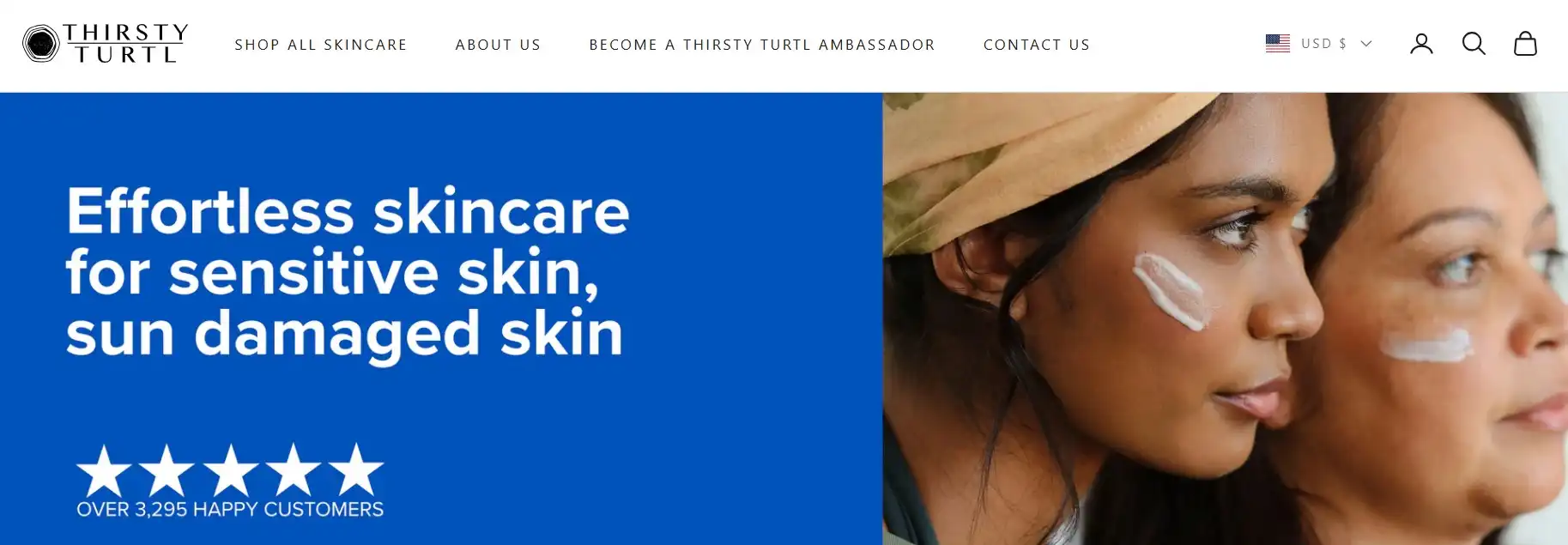
See how their landing page has the specific keyword “skincare for sensitive skin” in it? They aren’t just targeting people who need skincare — which is, arguably, a very broad term. Instead, they’re specifically targeting people who need skincare for sensitive and damaged skin.
By using such specific keywords, the brand is able to rank higher in search engine results, reaching their target customers.
3. Make your Shopify store mobile-friendly
More than 60% of all web traffic actually comes from mobiles. So, if your Shopify store isn’t optimized to be used easily on mobile phones, you’re probably losing out on a lot of sales.
But, what does making your Shopify store mobile-friendly mean?
Using a responsive Shopify design that automatically adjusts all the store elements to smaller screens
Uncluttered design, with a hamburger menu (i.e. the three lines stacked on top of one another) to make navigation easy on mobile
Large, touch-friendly buttons
Fast and simple checkout
As you scale up, you can also turn your Shopify store into a mobile app with one of the many Shopify mobile app builders available.
4. Simplify and speed up the checkout process
If your customers have to jump through too many hoops just to check out, you’re going to see a lot of cart abandonments. The best checkout processes are simple and convenient for the customers.
Here are some checkout mistakes to avoid:
Forcing customers to create accounts
Adding hidden fees during the checkout process
Not having easy, one-tap payment options
Asking customers to fill out lengthy forms
Slow-loading pages
Not having a secure website
5. Use retargeting methods
No matter how much traffic you get, a portion of it will be made up of people who visit your store but don’t buy anything. Or, they might add items to their cart, but leave without completing the purchase.
Retargeting essentially tracks all these users (with a tool like Instantly) and targets them again with highly-specific ads or emails.
What does this achieve? It may bring back buyers who were interested in your products, but were hesitant the first time around. It also keeps your brand at the top of their mind, so, even if they don’t purchase from your store right away, they might do so later.
In short, retargeting strategies lead to higher conversions, increased brand awareness, and more sales — especially if you sweeten the pot by giving them a little discount.
6. Upsell or cross-sell your products
Have you ever noticed that when you purchase something online, you often get a nudge to add similar items to your cart? That’s known as cross-selling, aka, the process of encouraging buyers to add more items to their cart to round off their purchase.
If a buyer adds a pair of sneakers to their cart, you could encourage them to add a pair of socks, too.
Here’s an example:
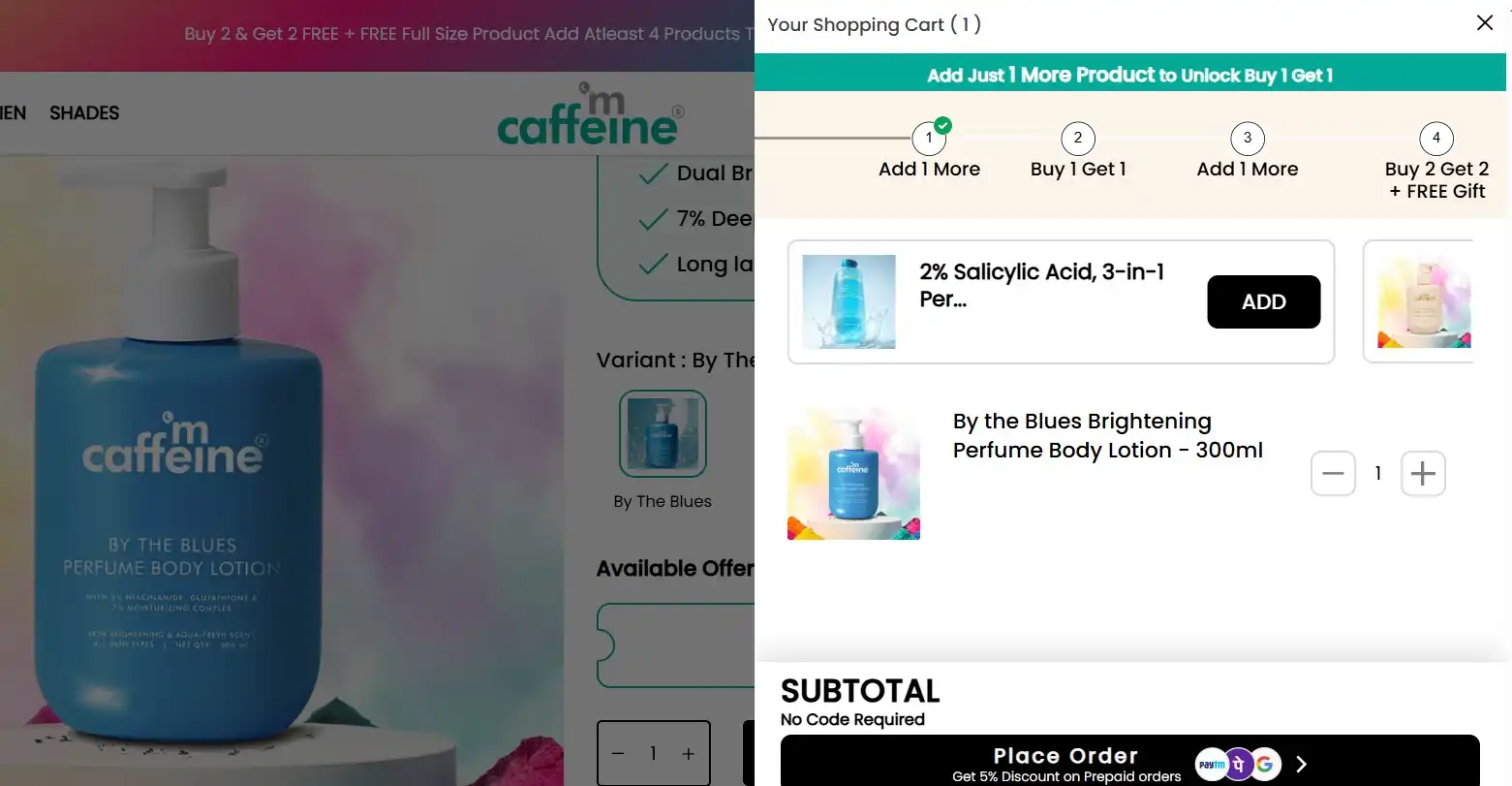
Additionally, you can also offer bundles, where customers can bundle a few different products together and get a discount on the total amount. Ideally, bundling should be offered to products that can be used together, such as a body wash and face wash.
Upselling, on the other hand, is nudging the buyers to purchase an upgraded or more expensive version of the item they're eyeing. This could be asking them to upgrade from a mini-sized water bottle to a full-sized one, but knocking a few dollars off the final amount.
In both cases, the customers leave with products that are actually valuable to them, while you make more sales.
7. Market the heck out of your Shopify store
Even if you’ve locked down your SEO strategies and have been consistently ranking well for the main keywords in your niche, you should still market yourself. This is non-negotiable.
Why? Because, organic rankings are not set in stone. You never know when they’ll fluctuate. Moreover, marketing helps you create consistent brand awareness and foster loyal customers.
Here are some big and small Shopify marketing methods that you can use:
Social media marketing
Having a consistent brand presence on social media lets you build a community of people who are interested in your niche. Over time, this turns into a loyal following of people who consider you the go-to brand for their shopping needs.
Expand your social media content beyond posts that just advertise your brand. Instead, add informational posts, create memes, and find a way to encourage conversations from your followers.
Take this brand, for example:
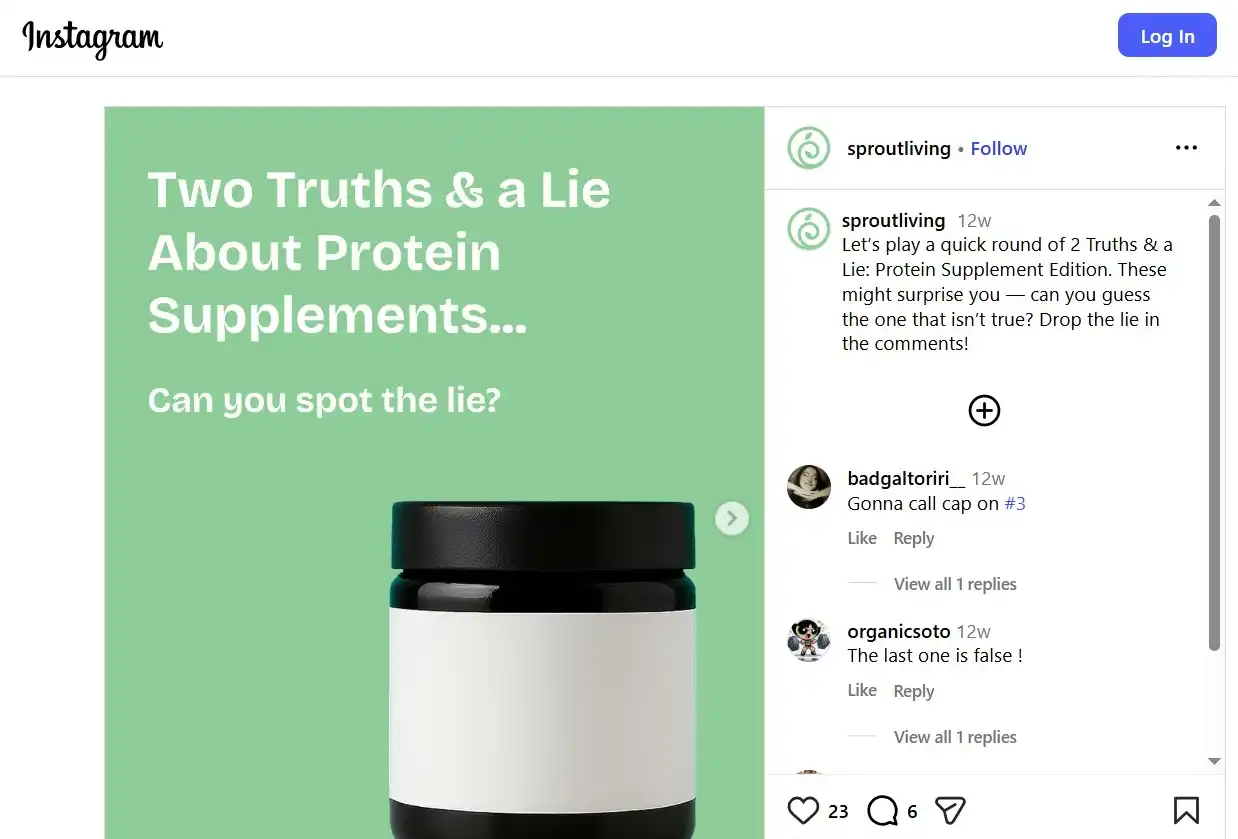
This post drives engagement, builds authority for the brand, and opens up a conversation: all great recipes that can convert into future sales.
Build an email list
Email marketing is a great way for you to speak to your customers directly and make them feel appreciated and valued. Even if social media platforms shut down, email will give you a way of reaching your customers.
Unlike the former, your email list is something that’s only available to the select few that subscribe to it, which makes it all the more valuable. Because, you get to upsell and cross-sell to people who have already shown interest in your brand. This increases your chances of conversion.
Use these tips to get more sales from your email subscribers:
Give away exclusive discounts, coupon codes, and freebies for subscribers
Let them have first dibs on new product launches
Send them cart abandonment emails to nudge them to complete their purchase
Ask for their opinions and use them to shape your product strategy
Provide discounts for first-time buyers
People are always hesitant when it comes to trying out a new brand. What if they spend all that money, only to end up disliking the product?
This is where a small discount can help. Getting to buy an item for less than its full price reduces the risk factor they associate with it. Research corroborates that offering an initial discount of 5-20% significantly increases repeat purchases by customers.
Once you get those customers through the door, it becomes much more likely that they will turn into repeat buyers.
Run paid ads
With paid ads — such as Google Ads or social media ads — you can divide your potential customers into groups and then run tailored ads targeted to each group.
Let’s say you sell shoes for hikers, runners, and athletes. With paid ads, you can segment them into three groups in such a way that hikers will only see ads related to your hiking shoes, while the runners will only see ads related to your running shoes, and so on.
With paid ads, you typically pay per click, per 1,000 views, or when someone directly engages with your ad. You get a better return on your investment since you’re only targeting the people who actually need your products.
8. Highlight user reviews to build trust
People trust the opinions and recommendations of other customers over anything you say about your own brand. This is because other customers:
Aren’t biased, so their recommendations hold more weight
Aren’t paid to promote your product, so their opinions of your brand are more authentic
This is why highlighting the testimonials of previous customers on your Shopify store is very important. It builds trust in your brand, helps answer any specific questions people might have had about using your products, and reduces buyer hesitation.
Take Crosslist’s very own website, for example:

You’ll find such reviews peppered throughout our landing page because we want potential customers to see what existing users think of our tool. The more 5-star customer reviews you have, the more trust you’ll build.
9. Use Shopify analytics to tweak your strategy
Without data, you’ll never know which of your e-commerce strategies are working and which need a little more TLC.
Maybe the links on that ad campaign you ran are broken. Maybe a product isn’t converting well because the description doesn’t outline its benefits. Or, maybe international customers are finding it hard to buy from your store because you don’t have currency conversion set up.
The point is, you won’t know what the problems are unless you analyze the store data that Shopify gives you.
Use analytics to see where most of your traffic is coming from, the demographic breakdown of your visitors, average order value, the effectiveness of your marketing campaigns, and how customers behave on your site. This way, you can pinpoint the problem areas and work on fixing them.
Bonus: Relist on Shopify with Crosslist
If you notice any of your products becoming stale or not getting any more traffic, relisting with a tool like Crosslist that product can help boost its visibility.
Additionally, you can also expand to platforms beyond Shopify, such as Etsy, eBay, Poshmark, etc. Multi-channel selling actually helps you reach new audiences, get more visibility, and make more sales.
Use Crosslist to create a single listing and cross post it to all the marketplaces you want to sell on (including Shopify). You’ll drive up your revenue without putting in any extra effort! Sign up now.
If you’ve landed here, it’s probably because your Shopify store isn’t getting a lot of traffic or convincing visitors to buy your products. Or, maybe, your Shopify store is brand new, and you’re looking for ways to get your first customers through the door.
Either way, if you’re looking for Shopify growth hacks, you’ve come to the right place. Here, we discuss 9 (+1) simple, but actionable tips to grow your Shopify store.
1. Enhance your Shopify store’s user experience (UX)
Do you like shopping from websites with clunky interfaces that look like they were plucked straight out of the ‘80s? Neither do your customers.
So, if your Shopify store takes 10 seconds to load, has no search button or filters to make the product search process easier, or forces everyone to go through a lengthy account creation process, then you’re practically handing out reasons for potential customers to abandon you.
Why? It’s really simple: you’re making their shopping experience worse. This is why UX is crucial to a store’s success. In fact, a well-designed user experience can increase your conversions by up to 400%!
Here are a few components of a good UX:
Faster page loading times
High quality, compressed images that follow Shopify’s image size guide requirements
Text that’s easily readable
A website that’s easy to navigate with a search bar, product filtering tags, and big buttons
Guest checkout options
A clean and neat website design
In short, make the entire process as smooth and easy as possible for your users.
2. SEO-optimize your Shopify store
SEO, which is short for search engine optimization, is the best way to drive organic traffic to your e-commerce store without spending money on paid ads. At its core, SEO involves finding and using the right keywords throughout your website, notably on your landing page and product descriptions.
Keywords are the phrases that users search for. If someone is searching for a sweater, they might enter terms like “wool sweater” into the search bar. There are several SEO tools that you can use to find the keywords relevant to your brand.
Take a look at this skincare brand, for example:
See how their landing page has the specific keyword “skincare for sensitive skin” in it? They aren’t just targeting people who need skincare — which is, arguably, a very broad term. Instead, they’re specifically targeting people who need skincare for sensitive and damaged skin.
By using such specific keywords, the brand is able to rank higher in search engine results, reaching their target customers.
3. Make your Shopify store mobile-friendly
More than 60% of all web traffic actually comes from mobiles. So, if your Shopify store isn’t optimized to be used easily on mobile phones, you’re probably losing out on a lot of sales.
But, what does making your Shopify store mobile-friendly mean?
Using a responsive Shopify design that automatically adjusts all the store elements to smaller screens
Uncluttered design, with a hamburger menu (i.e. the three lines stacked on top of one another) to make navigation easy on mobile
Large, touch-friendly buttons
Fast and simple checkout
As you scale up, you can also turn your Shopify store into a mobile app with one of the many Shopify mobile app builders available.
4. Simplify and speed up the checkout process
If your customers have to jump through too many hoops just to check out, you’re going to see a lot of cart abandonments. The best checkout processes are simple and convenient for the customers.
Here are some checkout mistakes to avoid:
Forcing customers to create accounts
Adding hidden fees during the checkout process
Not having easy, one-tap payment options
Asking customers to fill out lengthy forms
Slow-loading pages
Not having a secure website
5. Use retargeting methods
No matter how much traffic you get, a portion of it will be made up of people who visit your store but don’t buy anything. Or, they might add items to their cart, but leave without completing the purchase.
Retargeting essentially tracks all these users (with a tool like Instantly) and targets them again with highly-specific ads or emails.
What does this achieve? It may bring back buyers who were interested in your products, but were hesitant the first time around. It also keeps your brand at the top of their mind, so, even if they don’t purchase from your store right away, they might do so later.
In short, retargeting strategies lead to higher conversions, increased brand awareness, and more sales — especially if you sweeten the pot by giving them a little discount.
6. Upsell or cross-sell your products
Have you ever noticed that when you purchase something online, you often get a nudge to add similar items to your cart? That’s known as cross-selling, aka, the process of encouraging buyers to add more items to their cart to round off their purchase.
If a buyer adds a pair of sneakers to their cart, you could encourage them to add a pair of socks, too.
Here’s an example:
Additionally, you can also offer bundles, where customers can bundle a few different products together and get a discount on the total amount. Ideally, bundling should be offered to products that can be used together, such as a body wash and face wash.
Upselling, on the other hand, is nudging the buyers to purchase an upgraded or more expensive version of the item they're eyeing. This could be asking them to upgrade from a mini-sized water bottle to a full-sized one, but knocking a few dollars off the final amount.
In both cases, the customers leave with products that are actually valuable to them, while you make more sales.
7. Market the heck out of your Shopify store
Even if you’ve locked down your SEO strategies and have been consistently ranking well for the main keywords in your niche, you should still market yourself. This is non-negotiable.
Why? Because, organic rankings are not set in stone. You never know when they’ll fluctuate. Moreover, marketing helps you create consistent brand awareness and foster loyal customers.
Here are some big and small Shopify marketing methods that you can use:
Social media marketing
Having a consistent brand presence on social media lets you build a community of people who are interested in your niche. Over time, this turns into a loyal following of people who consider you the go-to brand for their shopping needs.
Expand your social media content beyond posts that just advertise your brand. Instead, add informational posts, create memes, and find a way to encourage conversations from your followers.
Take this brand, for example:
This post drives engagement, builds authority for the brand, and opens up a conversation: all great recipes that can convert into future sales.
Build an email list
Email marketing is a great way for you to speak to your customers directly and make them feel appreciated and valued. Even if social media platforms shut down, email will give you a way of reaching your customers.
Unlike the former, your email list is something that’s only available to the select few that subscribe to it, which makes it all the more valuable. Because, you get to upsell and cross-sell to people who have already shown interest in your brand. This increases your chances of conversion.
Use these tips to get more sales from your email subscribers:
Give away exclusive discounts, coupon codes, and freebies for subscribers
Let them have first dibs on new product launches
Send them cart abandonment emails to nudge them to complete their purchase
Ask for their opinions and use them to shape your product strategy
Provide discounts for first-time buyers
People are always hesitant when it comes to trying out a new brand. What if they spend all that money, only to end up disliking the product?
This is where a small discount can help. Getting to buy an item for less than its full price reduces the risk factor they associate with it. Research corroborates that offering an initial discount of 5-20% significantly increases repeat purchases by customers.
Once you get those customers through the door, it becomes much more likely that they will turn into repeat buyers.
Run paid ads
With paid ads — such as Google Ads or social media ads — you can divide your potential customers into groups and then run tailored ads targeted to each group.
Let’s say you sell shoes for hikers, runners, and athletes. With paid ads, you can segment them into three groups in such a way that hikers will only see ads related to your hiking shoes, while the runners will only see ads related to your running shoes, and so on.
With paid ads, you typically pay per click, per 1,000 views, or when someone directly engages with your ad. You get a better return on your investment since you’re only targeting the people who actually need your products.
8. Highlight user reviews to build trust
People trust the opinions and recommendations of other customers over anything you say about your own brand. This is because other customers:
Aren’t biased, so their recommendations hold more weight
Aren’t paid to promote your product, so their opinions of your brand are more authentic
This is why highlighting the testimonials of previous customers on your Shopify store is very important. It builds trust in your brand, helps answer any specific questions people might have had about using your products, and reduces buyer hesitation.
Take Crosslist’s very own website, for example:
You’ll find such reviews peppered throughout our landing page because we want potential customers to see what existing users think of our tool. The more 5-star customer reviews you have, the more trust you’ll build.
9. Use Shopify analytics to tweak your strategy
Without data, you’ll never know which of your e-commerce strategies are working and which need a little more TLC.
Maybe the links on that ad campaign you ran are broken. Maybe a product isn’t converting well because the description doesn’t outline its benefits. Or, maybe international customers are finding it hard to buy from your store because you don’t have currency conversion set up.
The point is, you won’t know what the problems are unless you analyze the store data that Shopify gives you.
Use analytics to see where most of your traffic is coming from, the demographic breakdown of your visitors, average order value, the effectiveness of your marketing campaigns, and how customers behave on your site. This way, you can pinpoint the problem areas and work on fixing them.
Bonus: Relist on Shopify with Crosslist
If you notice any of your products becoming stale or not getting any more traffic, relisting with a tool like Crosslist that product can help boost its visibility.
Additionally, you can also expand to platforms beyond Shopify, such as Etsy, eBay, Poshmark, etc. Multi-channel selling actually helps you reach new audiences, get more visibility, and make more sales.
Use Crosslist to create a single listing and cross post it to all the marketplaces you want to sell on (including Shopify). You’ll drive up your revenue without putting in any extra effort! Sign up now.
If you’ve landed here, it’s probably because your Shopify store isn’t getting a lot of traffic or convincing visitors to buy your products. Or, maybe, your Shopify store is brand new, and you’re looking for ways to get your first customers through the door.
Either way, if you’re looking for Shopify growth hacks, you’ve come to the right place. Here, we discuss 9 (+1) simple, but actionable tips to grow your Shopify store.
1. Enhance your Shopify store’s user experience (UX)
Do you like shopping from websites with clunky interfaces that look like they were plucked straight out of the ‘80s? Neither do your customers.
So, if your Shopify store takes 10 seconds to load, has no search button or filters to make the product search process easier, or forces everyone to go through a lengthy account creation process, then you’re practically handing out reasons for potential customers to abandon you.
Why? It’s really simple: you’re making their shopping experience worse. This is why UX is crucial to a store’s success. In fact, a well-designed user experience can increase your conversions by up to 400%!
Here are a few components of a good UX:
Faster page loading times
High quality, compressed images that follow Shopify’s image size guide requirements
Text that’s easily readable
A website that’s easy to navigate with a search bar, product filtering tags, and big buttons
Guest checkout options
A clean and neat website design
In short, make the entire process as smooth and easy as possible for your users.
2. SEO-optimize your Shopify store
SEO, which is short for search engine optimization, is the best way to drive organic traffic to your e-commerce store without spending money on paid ads. At its core, SEO involves finding and using the right keywords throughout your website, notably on your landing page and product descriptions.
Keywords are the phrases that users search for. If someone is searching for a sweater, they might enter terms like “wool sweater” into the search bar. There are several SEO tools that you can use to find the keywords relevant to your brand.
Take a look at this skincare brand, for example:
See how their landing page has the specific keyword “skincare for sensitive skin” in it? They aren’t just targeting people who need skincare — which is, arguably, a very broad term. Instead, they’re specifically targeting people who need skincare for sensitive and damaged skin.
By using such specific keywords, the brand is able to rank higher in search engine results, reaching their target customers.
3. Make your Shopify store mobile-friendly
More than 60% of all web traffic actually comes from mobiles. So, if your Shopify store isn’t optimized to be used easily on mobile phones, you’re probably losing out on a lot of sales.
But, what does making your Shopify store mobile-friendly mean?
Using a responsive Shopify design that automatically adjusts all the store elements to smaller screens
Uncluttered design, with a hamburger menu (i.e. the three lines stacked on top of one another) to make navigation easy on mobile
Large, touch-friendly buttons
Fast and simple checkout
As you scale up, you can also turn your Shopify store into a mobile app with one of the many Shopify mobile app builders available.
4. Simplify and speed up the checkout process
If your customers have to jump through too many hoops just to check out, you’re going to see a lot of cart abandonments. The best checkout processes are simple and convenient for the customers.
Here are some checkout mistakes to avoid:
Forcing customers to create accounts
Adding hidden fees during the checkout process
Not having easy, one-tap payment options
Asking customers to fill out lengthy forms
Slow-loading pages
Not having a secure website
5. Use retargeting methods
No matter how much traffic you get, a portion of it will be made up of people who visit your store but don’t buy anything. Or, they might add items to their cart, but leave without completing the purchase.
Retargeting essentially tracks all these users (with a tool like Instantly) and targets them again with highly-specific ads or emails.
What does this achieve? It may bring back buyers who were interested in your products, but were hesitant the first time around. It also keeps your brand at the top of their mind, so, even if they don’t purchase from your store right away, they might do so later.
In short, retargeting strategies lead to higher conversions, increased brand awareness, and more sales — especially if you sweeten the pot by giving them a little discount.
6. Upsell or cross-sell your products
Have you ever noticed that when you purchase something online, you often get a nudge to add similar items to your cart? That’s known as cross-selling, aka, the process of encouraging buyers to add more items to their cart to round off their purchase.
If a buyer adds a pair of sneakers to their cart, you could encourage them to add a pair of socks, too.
Here’s an example:
Additionally, you can also offer bundles, where customers can bundle a few different products together and get a discount on the total amount. Ideally, bundling should be offered to products that can be used together, such as a body wash and face wash.
Upselling, on the other hand, is nudging the buyers to purchase an upgraded or more expensive version of the item they're eyeing. This could be asking them to upgrade from a mini-sized water bottle to a full-sized one, but knocking a few dollars off the final amount.
In both cases, the customers leave with products that are actually valuable to them, while you make more sales.
7. Market the heck out of your Shopify store
Even if you’ve locked down your SEO strategies and have been consistently ranking well for the main keywords in your niche, you should still market yourself. This is non-negotiable.
Why? Because, organic rankings are not set in stone. You never know when they’ll fluctuate. Moreover, marketing helps you create consistent brand awareness and foster loyal customers.
Here are some big and small Shopify marketing methods that you can use:
Social media marketing
Having a consistent brand presence on social media lets you build a community of people who are interested in your niche. Over time, this turns into a loyal following of people who consider you the go-to brand for their shopping needs.
Expand your social media content beyond posts that just advertise your brand. Instead, add informational posts, create memes, and find a way to encourage conversations from your followers.
Take this brand, for example:
This post drives engagement, builds authority for the brand, and opens up a conversation: all great recipes that can convert into future sales.
Build an email list
Email marketing is a great way for you to speak to your customers directly and make them feel appreciated and valued. Even if social media platforms shut down, email will give you a way of reaching your customers.
Unlike the former, your email list is something that’s only available to the select few that subscribe to it, which makes it all the more valuable. Because, you get to upsell and cross-sell to people who have already shown interest in your brand. This increases your chances of conversion.
Use these tips to get more sales from your email subscribers:
Give away exclusive discounts, coupon codes, and freebies for subscribers
Let them have first dibs on new product launches
Send them cart abandonment emails to nudge them to complete their purchase
Ask for their opinions and use them to shape your product strategy
Provide discounts for first-time buyers
People are always hesitant when it comes to trying out a new brand. What if they spend all that money, only to end up disliking the product?
This is where a small discount can help. Getting to buy an item for less than its full price reduces the risk factor they associate with it. Research corroborates that offering an initial discount of 5-20% significantly increases repeat purchases by customers.
Once you get those customers through the door, it becomes much more likely that they will turn into repeat buyers.
Run paid ads
With paid ads — such as Google Ads or social media ads — you can divide your potential customers into groups and then run tailored ads targeted to each group.
Let’s say you sell shoes for hikers, runners, and athletes. With paid ads, you can segment them into three groups in such a way that hikers will only see ads related to your hiking shoes, while the runners will only see ads related to your running shoes, and so on.
With paid ads, you typically pay per click, per 1,000 views, or when someone directly engages with your ad. You get a better return on your investment since you’re only targeting the people who actually need your products.
8. Highlight user reviews to build trust
People trust the opinions and recommendations of other customers over anything you say about your own brand. This is because other customers:
Aren’t biased, so their recommendations hold more weight
Aren’t paid to promote your product, so their opinions of your brand are more authentic
This is why highlighting the testimonials of previous customers on your Shopify store is very important. It builds trust in your brand, helps answer any specific questions people might have had about using your products, and reduces buyer hesitation.
Take Crosslist’s very own website, for example:
You’ll find such reviews peppered throughout our landing page because we want potential customers to see what existing users think of our tool. The more 5-star customer reviews you have, the more trust you’ll build.
9. Use Shopify analytics to tweak your strategy
Without data, you’ll never know which of your e-commerce strategies are working and which need a little more TLC.
Maybe the links on that ad campaign you ran are broken. Maybe a product isn’t converting well because the description doesn’t outline its benefits. Or, maybe international customers are finding it hard to buy from your store because you don’t have currency conversion set up.
The point is, you won’t know what the problems are unless you analyze the store data that Shopify gives you.
Use analytics to see where most of your traffic is coming from, the demographic breakdown of your visitors, average order value, the effectiveness of your marketing campaigns, and how customers behave on your site. This way, you can pinpoint the problem areas and work on fixing them.
Bonus: Relist on Shopify with Crosslist
If you notice any of your products becoming stale or not getting any more traffic, relisting with a tool like Crosslist that product can help boost its visibility.
Additionally, you can also expand to platforms beyond Shopify, such as Etsy, eBay, Poshmark, etc. Multi-channel selling actually helps you reach new audiences, get more visibility, and make more sales.
Use Crosslist to create a single listing and cross post it to all the marketplaces you want to sell on (including Shopify). You’ll drive up your revenue without putting in any extra effort! Sign up now.
If you’ve landed here, it’s probably because your Shopify store isn’t getting a lot of traffic or convincing visitors to buy your products. Or, maybe, your Shopify store is brand new, and you’re looking for ways to get your first customers through the door.
Either way, if you’re looking for Shopify growth hacks, you’ve come to the right place. Here, we discuss 9 (+1) simple, but actionable tips to grow your Shopify store.
1. Enhance your Shopify store’s user experience (UX)
Do you like shopping from websites with clunky interfaces that look like they were plucked straight out of the ‘80s? Neither do your customers.
So, if your Shopify store takes 10 seconds to load, has no search button or filters to make the product search process easier, or forces everyone to go through a lengthy account creation process, then you’re practically handing out reasons for potential customers to abandon you.
Why? It’s really simple: you’re making their shopping experience worse. This is why UX is crucial to a store’s success. In fact, a well-designed user experience can increase your conversions by up to 400%!
Here are a few components of a good UX:
Faster page loading times
High quality, compressed images that follow Shopify’s image size guide requirements
Text that’s easily readable
A website that’s easy to navigate with a search bar, product filtering tags, and big buttons
Guest checkout options
A clean and neat website design
In short, make the entire process as smooth and easy as possible for your users.
2. SEO-optimize your Shopify store
SEO, which is short for search engine optimization, is the best way to drive organic traffic to your e-commerce store without spending money on paid ads. At its core, SEO involves finding and using the right keywords throughout your website, notably on your landing page and product descriptions.
Keywords are the phrases that users search for. If someone is searching for a sweater, they might enter terms like “wool sweater” into the search bar. There are several SEO tools that you can use to find the keywords relevant to your brand.
Take a look at this skincare brand, for example:
See how their landing page has the specific keyword “skincare for sensitive skin” in it? They aren’t just targeting people who need skincare — which is, arguably, a very broad term. Instead, they’re specifically targeting people who need skincare for sensitive and damaged skin.
By using such specific keywords, the brand is able to rank higher in search engine results, reaching their target customers.
3. Make your Shopify store mobile-friendly
More than 60% of all web traffic actually comes from mobiles. So, if your Shopify store isn’t optimized to be used easily on mobile phones, you’re probably losing out on a lot of sales.
But, what does making your Shopify store mobile-friendly mean?
Using a responsive Shopify design that automatically adjusts all the store elements to smaller screens
Uncluttered design, with a hamburger menu (i.e. the three lines stacked on top of one another) to make navigation easy on mobile
Large, touch-friendly buttons
Fast and simple checkout
As you scale up, you can also turn your Shopify store into a mobile app with one of the many Shopify mobile app builders available.
4. Simplify and speed up the checkout process
If your customers have to jump through too many hoops just to check out, you’re going to see a lot of cart abandonments. The best checkout processes are simple and convenient for the customers.
Here are some checkout mistakes to avoid:
Forcing customers to create accounts
Adding hidden fees during the checkout process
Not having easy, one-tap payment options
Asking customers to fill out lengthy forms
Slow-loading pages
Not having a secure website
5. Use retargeting methods
No matter how much traffic you get, a portion of it will be made up of people who visit your store but don’t buy anything. Or, they might add items to their cart, but leave without completing the purchase.
Retargeting essentially tracks all these users (with a tool like Instantly) and targets them again with highly-specific ads or emails.
What does this achieve? It may bring back buyers who were interested in your products, but were hesitant the first time around. It also keeps your brand at the top of their mind, so, even if they don’t purchase from your store right away, they might do so later.
In short, retargeting strategies lead to higher conversions, increased brand awareness, and more sales — especially if you sweeten the pot by giving them a little discount.
6. Upsell or cross-sell your products
Have you ever noticed that when you purchase something online, you often get a nudge to add similar items to your cart? That’s known as cross-selling, aka, the process of encouraging buyers to add more items to their cart to round off their purchase.
If a buyer adds a pair of sneakers to their cart, you could encourage them to add a pair of socks, too.
Here’s an example:
Additionally, you can also offer bundles, where customers can bundle a few different products together and get a discount on the total amount. Ideally, bundling should be offered to products that can be used together, such as a body wash and face wash.
Upselling, on the other hand, is nudging the buyers to purchase an upgraded or more expensive version of the item they're eyeing. This could be asking them to upgrade from a mini-sized water bottle to a full-sized one, but knocking a few dollars off the final amount.
In both cases, the customers leave with products that are actually valuable to them, while you make more sales.
7. Market the heck out of your Shopify store
Even if you’ve locked down your SEO strategies and have been consistently ranking well for the main keywords in your niche, you should still market yourself. This is non-negotiable.
Why? Because, organic rankings are not set in stone. You never know when they’ll fluctuate. Moreover, marketing helps you create consistent brand awareness and foster loyal customers.
Here are some big and small Shopify marketing methods that you can use:
Social media marketing
Having a consistent brand presence on social media lets you build a community of people who are interested in your niche. Over time, this turns into a loyal following of people who consider you the go-to brand for their shopping needs.
Expand your social media content beyond posts that just advertise your brand. Instead, add informational posts, create memes, and find a way to encourage conversations from your followers.
Take this brand, for example:
This post drives engagement, builds authority for the brand, and opens up a conversation: all great recipes that can convert into future sales.
Build an email list
Email marketing is a great way for you to speak to your customers directly and make them feel appreciated and valued. Even if social media platforms shut down, email will give you a way of reaching your customers.
Unlike the former, your email list is something that’s only available to the select few that subscribe to it, which makes it all the more valuable. Because, you get to upsell and cross-sell to people who have already shown interest in your brand. This increases your chances of conversion.
Use these tips to get more sales from your email subscribers:
Give away exclusive discounts, coupon codes, and freebies for subscribers
Let them have first dibs on new product launches
Send them cart abandonment emails to nudge them to complete their purchase
Ask for their opinions and use them to shape your product strategy
Provide discounts for first-time buyers
People are always hesitant when it comes to trying out a new brand. What if they spend all that money, only to end up disliking the product?
This is where a small discount can help. Getting to buy an item for less than its full price reduces the risk factor they associate with it. Research corroborates that offering an initial discount of 5-20% significantly increases repeat purchases by customers.
Once you get those customers through the door, it becomes much more likely that they will turn into repeat buyers.
Run paid ads
With paid ads — such as Google Ads or social media ads — you can divide your potential customers into groups and then run tailored ads targeted to each group.
Let’s say you sell shoes for hikers, runners, and athletes. With paid ads, you can segment them into three groups in such a way that hikers will only see ads related to your hiking shoes, while the runners will only see ads related to your running shoes, and so on.
With paid ads, you typically pay per click, per 1,000 views, or when someone directly engages with your ad. You get a better return on your investment since you’re only targeting the people who actually need your products.
8. Highlight user reviews to build trust
People trust the opinions and recommendations of other customers over anything you say about your own brand. This is because other customers:
Aren’t biased, so their recommendations hold more weight
Aren’t paid to promote your product, so their opinions of your brand are more authentic
This is why highlighting the testimonials of previous customers on your Shopify store is very important. It builds trust in your brand, helps answer any specific questions people might have had about using your products, and reduces buyer hesitation.
Take Crosslist’s very own website, for example:
You’ll find such reviews peppered throughout our landing page because we want potential customers to see what existing users think of our tool. The more 5-star customer reviews you have, the more trust you’ll build.
9. Use Shopify analytics to tweak your strategy
Without data, you’ll never know which of your e-commerce strategies are working and which need a little more TLC.
Maybe the links on that ad campaign you ran are broken. Maybe a product isn’t converting well because the description doesn’t outline its benefits. Or, maybe international customers are finding it hard to buy from your store because you don’t have currency conversion set up.
The point is, you won’t know what the problems are unless you analyze the store data that Shopify gives you.
Use analytics to see where most of your traffic is coming from, the demographic breakdown of your visitors, average order value, the effectiveness of your marketing campaigns, and how customers behave on your site. This way, you can pinpoint the problem areas and work on fixing them.
Bonus: Relist on Shopify with Crosslist
If you notice any of your products becoming stale or not getting any more traffic, relisting with a tool like Crosslist that product can help boost its visibility.
Additionally, you can also expand to platforms beyond Shopify, such as Etsy, eBay, Poshmark, etc. Multi-channel selling actually helps you reach new audiences, get more visibility, and make more sales.
Use Crosslist to create a single listing and cross post it to all the marketplaces you want to sell on (including Shopify). You’ll drive up your revenue without putting in any extra effort! Sign up now.