

Picture this: You’re staring down your closet, and it’s packed with the hottest styles… that just aren’t your style anymore. How are you going to offload all those unique clothes and accessories?
The answer is Depop. Or maybe it’s Poshmark. Both apps are among the most popular platforms for the resale market, giving you a place to list and sell your whole designer closet (or at least the pieces that need a new home).
They attract different buyers and charge very different fees.
Not only that, but you can list other unique items for sale, too – everything from home goods to wall art and more.
The question is, which platform is the best place for you to give your stuff new life? Should you be selling on Depop vs Poshmark?
Each app has its pros and cons, and neither is perfect – but one of them will definitely help you make some sales.
Key takeaways
Depop has no selling fee for US and UK sellers, you only pay payment processing (3.3% + $0.45 in the US). Poshmark charges 20% on sales over $15 or $2.95 flat under $15.
Depop attracts Gen Z buyers looking for vintage, streetwear, and one-of-a-kind items. Poshmark's audience is broader and skews toward millennial women shopping for name-brand fashion.
Poshmark includes a flat $6.49 prepaid USPS Ground Advantage shipping label. Depop lets sellers choose their own shipping method and carrier.
Both platforms require daily activity for visibility. Depop rewards frequent listing and engagement, while Poshmark requires sharing and community participation.
Crosslist lets you list on both Depop and Poshmark and more from one universal form, with autodelist to prevent double-selling.
What is Depop?
Depop is a UK-based social e-commerce service where people can sell secondhand goods, or a resale app – the same kind of app as Poshmark.
The biggest difference is that Depop is mostly for buying and selling goods that are one-of-a-kind, vintage, or from independent designers.
If your stuff is vintage, handmade, or from an indie designer, then you’ll probably find a good audience on Depop. Basically, you need to have truly unique stuff to find success on Depop.
Is Depop a legit marketplace?
Depop is a legitimate marketplace for buying and selling used goods. That being said, Depop lacks the same buying protections that other buy-sell apps have, which makes users more vulnerable to scams.
For instance, a scammer can post an item for sale that they don’t actually have or intend to sell. When a buyer purchases it, the scammer could neglect to send the item and provide a fake tracking number.
How does selling on Depop work?
It’s simple to sell on Depop. First, you have to set up an account.
Here’s how:
Download the Depop app (from the App Store or Google Play Store).
Enter your phone number and email address.
Select a username and password.
Choose a photo to use as a profile picture.
Once you’re good to go, you can post listings for your items. You just need to:
Tap Sell > List an item.
Upload photos of the item (up to four photos and one video).
Write an item description with plenty of detail.
Select the category, location, condition, and price.
Tap Post listing.
That’s it! You’ve posted your first item for sale on Depop.
How fees work on Depop
On Depop, there’s no fee to buy an item (other than the item price). Additionally, there’s no charge to list an item. There are no selling fees if you live in the US or UK, either.
You’ll only have to pay a processing fee as follows:
For US sellers: 3.3% + $0.45
For UK sellers: 2.9% + £0.30
There are seller fees if you live outside of the UK or UK though.
Those fees include:
A 10% Depop fee (based on the entire transaction amount, including shipping)
A transaction fee for PayPal that varies based on your location
There’s an easy way to find out what your Depop fees are going to be before you list your item.
Check out our Depop fee calculator to find out what each listing will cost when it sells.
The verdict about Depop
Depop is a legitimate place to buy and sell preowned items, but it has a reputation for giving users a headache. It’s common for people to report problems with customer service, fraudulent buyers, or account deactivations.
That said, there are still plenty of users who turn a profit using Depop. It’s a massive global marketplace where you can reach millions of people at a given time — you’re not going to get that reach selling on your Facebook Marketplace — which typically only shows local listings.
What is Poshmark?
Poshmark has the distinction of being the first social e-commerce app to make it big. It launched in 2011 and has been a staple of the online preowned marketplace ever since.
While Poshmark targets buyers who want to shop for clothes and accessories, the app also lets sellers list home goods, pet products, electronics, wellness items, and more.
Is Poshmark a legit marketplace?
Poshmark is a legitimate place to buy and sell your preowned clothes and other unique items in good condition. That said, every social e-commerce app is vulnerable to scammers – buyers and sellers alike.
How does selling on Poshmark work?
It’s easy and straightforward to sell your items on Poshmark.
Here’s what you need to do:
Make an account: First, create a user account with your name, email address, and phone number. Choose a password.
Set up your payment details: Select how you want to be paid and input your details so you can get money when the time comes!
Photograph your stuff: Take clear, well-lit pictures of the items you’re selling, using different angles and putting extra emphasis on showing any flaws.
Write a product description: Describe your items with a ton of detail, being honest about defects if they’re present.
Price your items: When you choose your price, consider looking up other items in the same brand to see what they’re selling for. Also, take note that you’re going to lose 20% of the sale to Poshmark’s commission fee.
Add tags: Poshmark uses style tags to make it easy to search, so make sure you use as many tags as you can so buyers can find your items.
Publish your listing: Just hit the Publish button and you’re good to go! Now you can share your item on social media and wait for it to sell.
How fees work on Poshmark
Listing an item on Poshmark is always free, but there’s a fee when you sell an item.
The fee is 20% as long as the item you sold was at least $15. For items less than $15, there’s a flat rate fee of $2.95.
There’s an easy way to tell in advance what your Poshmark fees will be for any given item.
Just check out our Poshmark fee calculator to see how much you’ll have to pay when your item sells.
The verdict about Poshmark
Poshmark is a legitimate way to sell your stuff, whether you’re looking to offload designer clothes from your closet or abstract art from your walls.
It’s a great app that’s easy to use and packed full of features to make it easy to sell items, even if you’ve never sold anything before.
Overall, Poshmark seems to have fewer issues than Depop, but the issues that it does have are all similar. Users report trouble reaching customer service, problems with counterfeit items, and running into scammers.
What do sellers say about each platform?
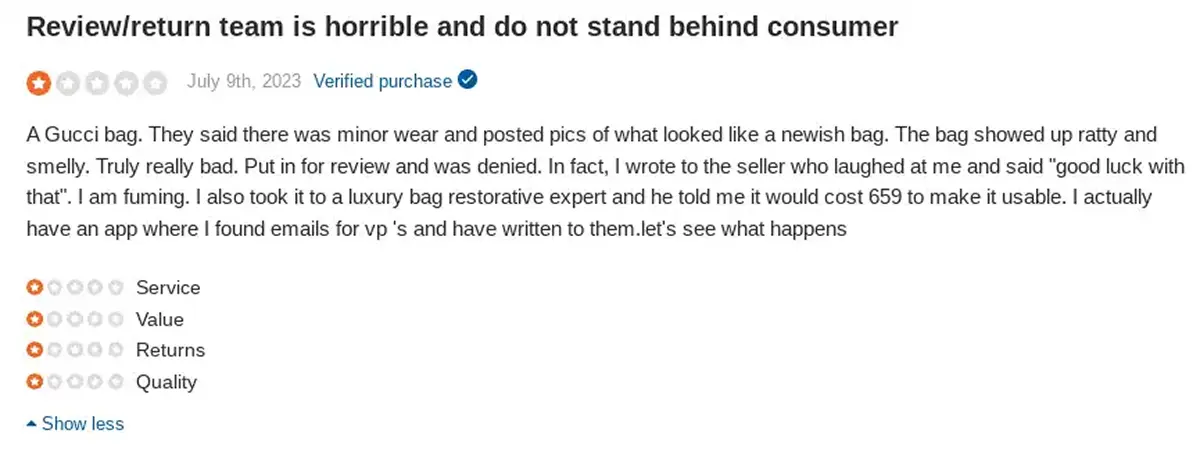
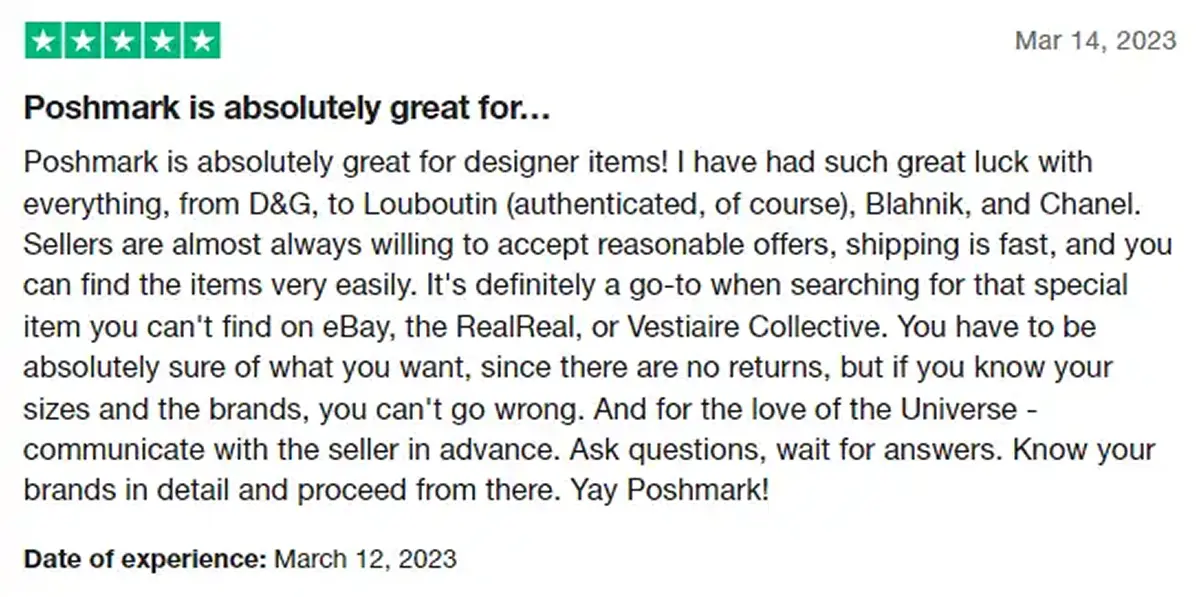
Neither platform has stellar reviews.
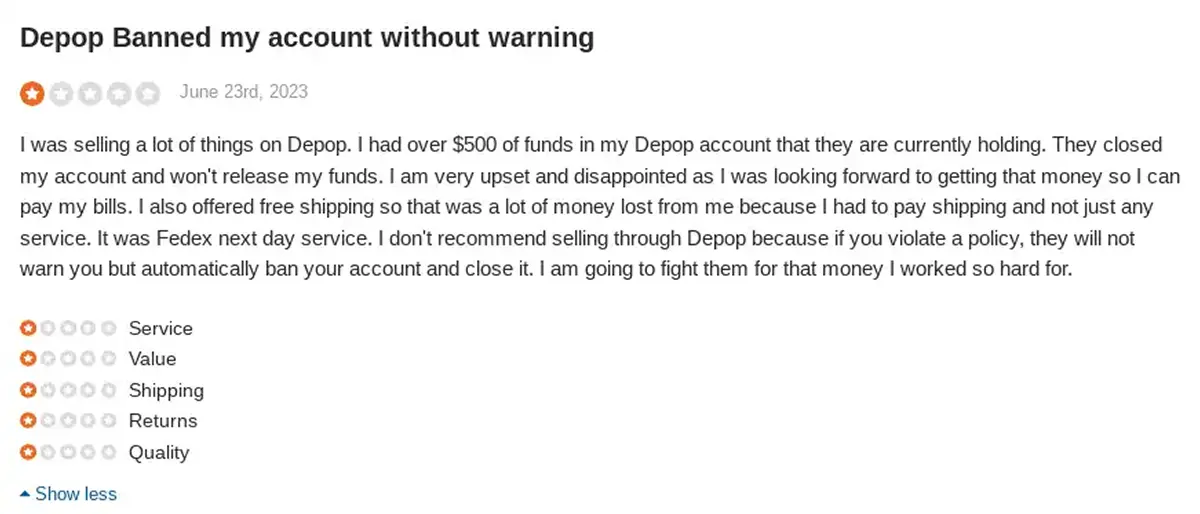
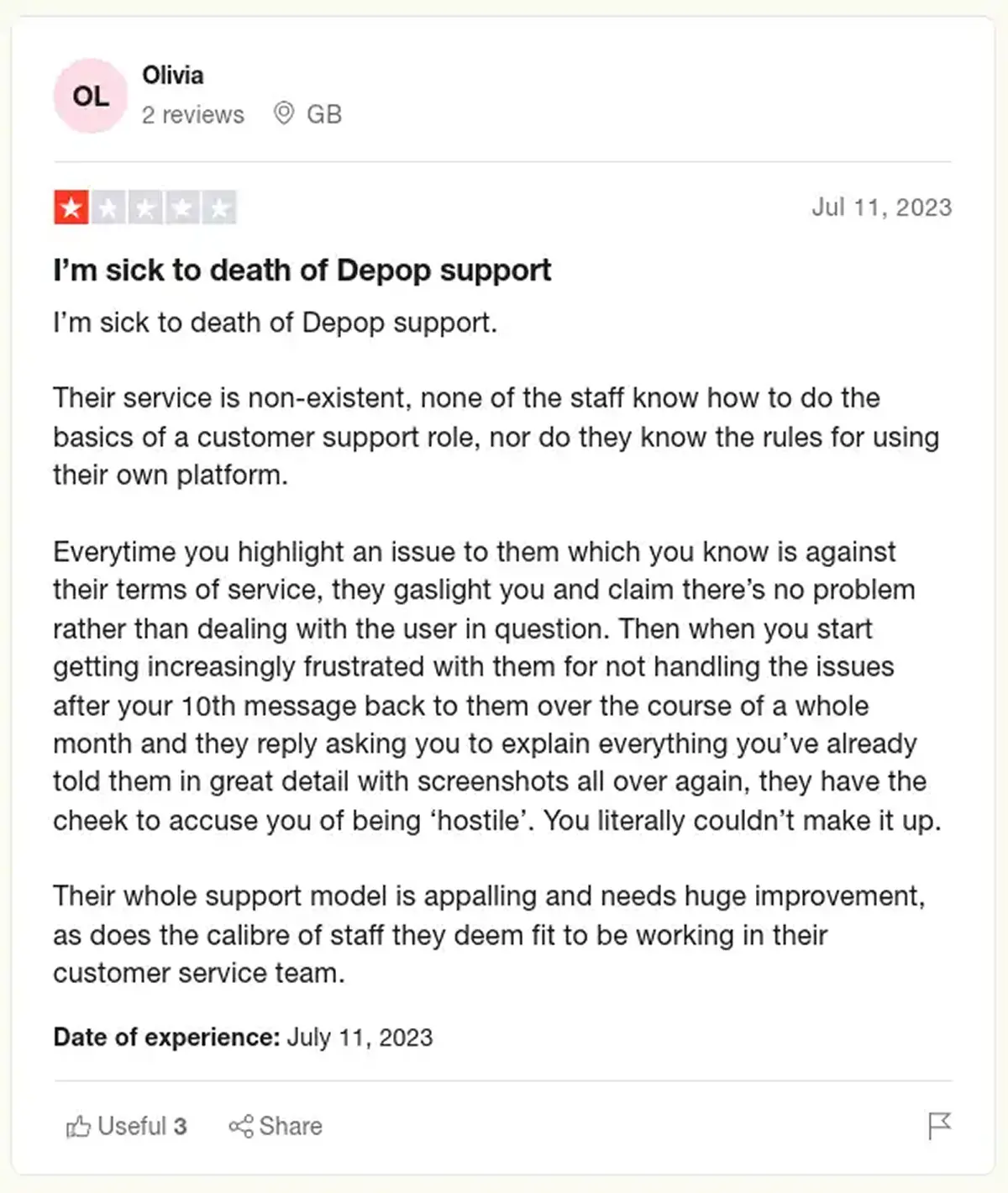
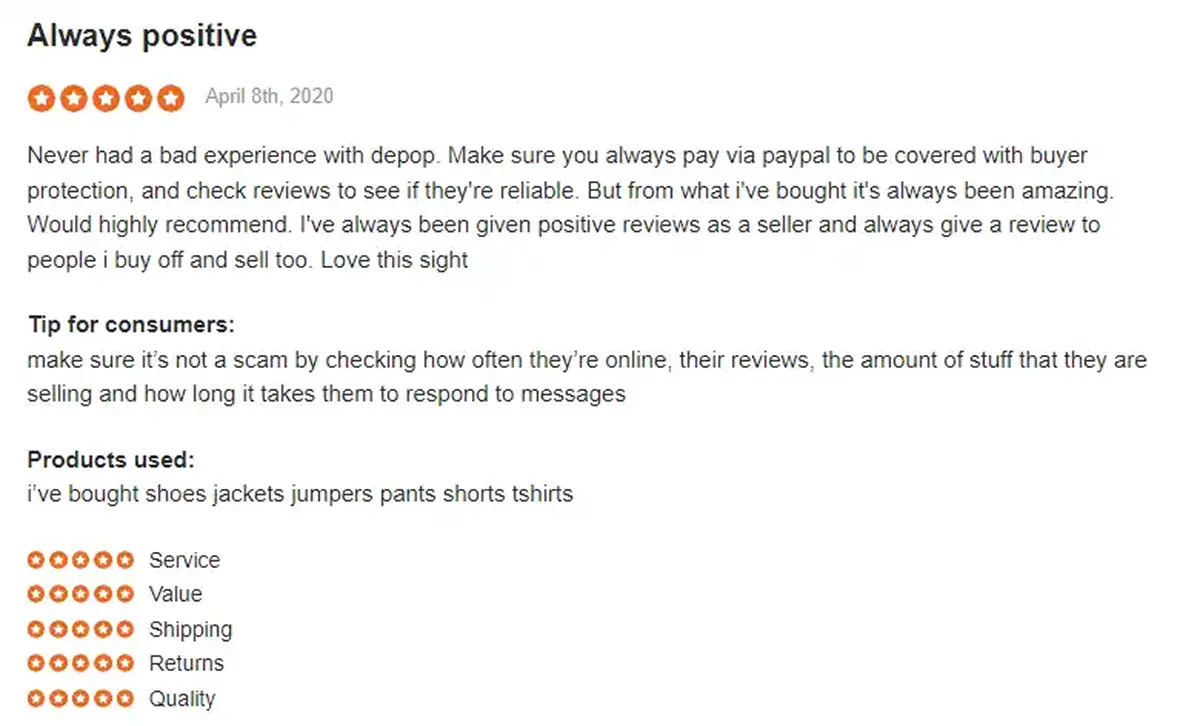
Depop sits at 1.3 stars on Trustpilot from nearly 7,000 reviews, with the most common complaints being account deactivations without warning, unresponsive customer service, and funds being locked in suspended accounts.
Read our full Depop review for the detailed breakdown.
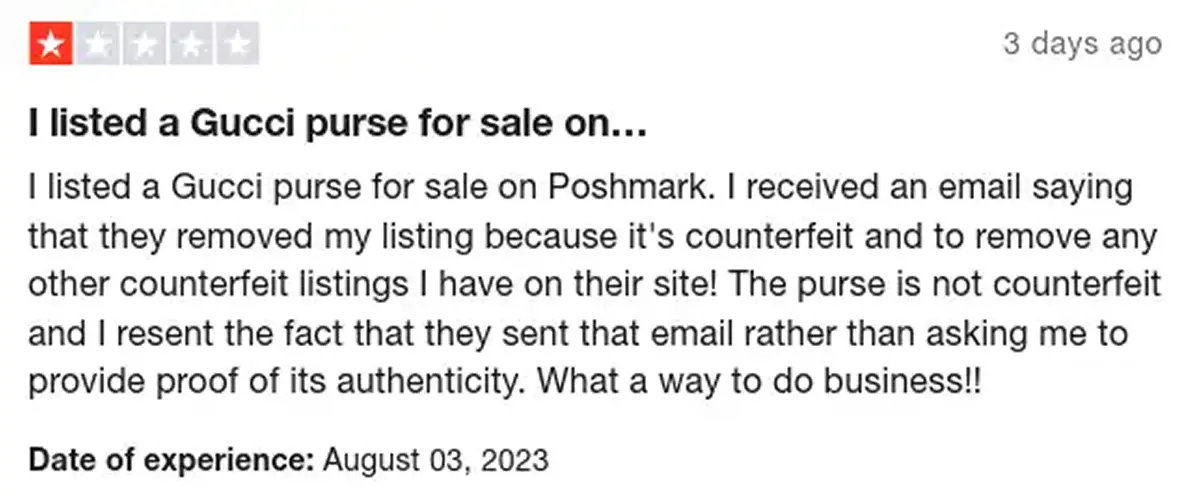
Poshmark fares slightly better at 1.2 stars on Trustpilot from over 4,300 reviews.
Sellers report similar issues, slow customer service and counterfeit listings, but Poshmark's dispute resolution tends to be more responsive once you get through.
Read our full Poshmark review for more.
Low review scores are common across resale platforms. Both Depop and Poshmark have millions of active users who never leave reviews, so take the aggregate scores with context.
Pros and cons of both marketplaces
Fees
Depop has no selling fee for US and UK sellers, you only pay payment processing (3.3% + $0.45 in the US). Sellers outside the US and UK still pay 10% on top of processing.
Poshmark charges 20% on sales over $15, or a flat $2.95 under $15. There are no separate processing fees.
On a $50 item, you keep $47.90 on Depop vs $40.00 on Poshmark. For a detailed breakdown, read our Depop seller fees and Poshmark selling fees guides.
Audience and what sells
Depop skews Gen Z. Buyers come looking for vintage finds, streetwear, one-of-a-kind pieces, and indie designer items. The platform is stronger for men's fashion, particularly streetwear and trending brands. If your inventory has a curated aesthetic, Depop rewards that.
Poshmark's audience is broader and skews millennial. Name-brand fashion, designer handbags, Lululemon, and contemporary women's clothing move well. Poshmark also accepts home goods, pet products, and electronics, a wider range than most sellers realize.
Listing process and visibility
Both platforms require daily effort, but the effort looks different.
On Depop, visibility comes from posting frequently, refreshing listings, and responding to messages quickly. The algorithm favours active shops with strong photos.
On Poshmark, visibility depends on sharing your own listings and other sellers' listings, plus following buyers and participating in Posh Parties.
Experienced Poshmark sellers spend 15–30 minutes a day just on community activity. If you stop sharing for a week, your listings will disappear.
Neither platform is truly passive. If you want a list-and-forget experience, Mercari is the better fit. See our Mercari vs Poshmark comparison.
Shipping
Poshmark gives every order a prepaid USPS Ground Advantage label at a flat rate of $6.49 for packages up to 5 lbs, paid by the buyer. Simple and predictable. If the package exceeds 5 lbs, the seller pays overweight fees.
Depop lets sellers choose their own shipping method and carrier. You can use Depop's prepaid labels or ship independently through USPS, UPS, or FedEx. More flexibility, but more decisions.
For lightweight items, Depop's variable rates can be cheaper. For heavier items up to 5 lbs, Poshmark's flat rate often wins.
Returns and seller protection
Poshmark is more seller-friendly. Buyers have 3 days to accept an order, and returns are only approved for items that are not as described or damaged. If the buyer doesn't act within 3 days, the sale completes automatically.
Depop's return policy is more limited and less consistent. Buyer protection exists, but sellers report that disputes often go unresolved, especially when customer service is hard to reach.
Poshmark also offers Posh Protect for qualifying orders, giving both buyers and sellers a layer of fraud protection that Depop lacks.
Depop vs Poshmark: fee comparison on a $50 sale (US seller)
Depop (US) | Poshmark | |
|---|---|---|
Selling fee | $0 (0%) | $10.00 (20%) |
Processing fee | $2.10 (3.3% + $0.45) | Included |
Total fees | $2.10 | $10.00 |
Your payout | $47.90 | $40.00 |
Listing fee | $0 | $0 |
Shipping | Seller chooses (varies) | Flat $6.49 USPS Ground Advantage |
Withdrawal | Free | Free (direct deposit) or $2 (instant) |
Depop vs Poshmark: which is the top contender?
Now that we’ve taken a deep dive into Poshmark, Depop, and their respective similarities and differences, it’s time to see how they stack up with each other.
Poshmark | Depop | |
|---|---|---|
User rating | 1.5 stars on Sitejabber | 1.2 stars on Sitejabber |
Audience | Millenials | Gen Z |
User interface | User-friendly | User-friendly |
Customer service | Hard to reach, but helpful | Hard to reach and unlikely to help |
Fees | 20% | 10% |
Fraud protection | For buyers and sellers | None |
Items sold | Designer, new or used, there's a category for nearly everything | Vintage, unique, indie, one-of-a-kind, clothing, accessories, home goods |
In the end, there’s no winner between Depop vs Poshmark. Both apps are valid places to sell your used clothes and other items. In fact, why not use both?
List on both Depop and Poshmark with Crosslist
The real answer to ‘Poshmark vs Depop’ is both.
Depop's lower fees keep more of your money. Poshmark's larger US audience and community features move name-brand items faster.
Listing the same inventory on both platforms doubles your exposure to different buyer demographics.
Crosslist is how you run both without doing the work twice.
Fill in one universal form and your item posts to Depop, Poshmark, and 11+ other major marketplaces together.
When it sells on one, autodelist pulls it from the rest automatically, so you never sell the same piece twice or cancel an order.
There's one catch the comparison makes clear: neither platform is passive. Depop rewards frequent listing, and Poshmark listings fade if you stop sharing.
Crosslist lets you relist on Depop and relist on Poshmark in a few clicks, pushing stale listings back to the top of search on both without manually reposting each one.
Plans start at $29.99/month. Try Crosslist risk-free with the 3-day money-back guarantee.
Picture this: You’re staring down your closet, and it’s packed with the hottest styles… that just aren’t your style anymore. How are you going to offload all those unique clothes and accessories?
The answer is Depop. Or maybe it’s Poshmark. Both apps are among the most popular platforms for the resale market, giving you a place to list and sell your whole designer closet (or at least the pieces that need a new home).
They attract different buyers and charge very different fees.
Not only that, but you can list other unique items for sale, too – everything from home goods to wall art and more.
The question is, which platform is the best place for you to give your stuff new life? Should you be selling on Depop vs Poshmark?
Each app has its pros and cons, and neither is perfect – but one of them will definitely help you make some sales.
Key takeaways
Depop has no selling fee for US and UK sellers, you only pay payment processing (3.3% + $0.45 in the US). Poshmark charges 20% on sales over $15 or $2.95 flat under $15.
Depop attracts Gen Z buyers looking for vintage, streetwear, and one-of-a-kind items. Poshmark's audience is broader and skews toward millennial women shopping for name-brand fashion.
Poshmark includes a flat $6.49 prepaid USPS Ground Advantage shipping label. Depop lets sellers choose their own shipping method and carrier.
Both platforms require daily activity for visibility. Depop rewards frequent listing and engagement, while Poshmark requires sharing and community participation.
Crosslist lets you list on both Depop and Poshmark and more from one universal form, with autodelist to prevent double-selling.
What is Depop?
Depop is a UK-based social e-commerce service where people can sell secondhand goods, or a resale app – the same kind of app as Poshmark.
The biggest difference is that Depop is mostly for buying and selling goods that are one-of-a-kind, vintage, or from independent designers.
If your stuff is vintage, handmade, or from an indie designer, then you’ll probably find a good audience on Depop. Basically, you need to have truly unique stuff to find success on Depop.
Is Depop a legit marketplace?
Depop is a legitimate marketplace for buying and selling used goods. That being said, Depop lacks the same buying protections that other buy-sell apps have, which makes users more vulnerable to scams.
For instance, a scammer can post an item for sale that they don’t actually have or intend to sell. When a buyer purchases it, the scammer could neglect to send the item and provide a fake tracking number.
How does selling on Depop work?
It’s simple to sell on Depop. First, you have to set up an account.
Here’s how:
Download the Depop app (from the App Store or Google Play Store).
Enter your phone number and email address.
Select a username and password.
Choose a photo to use as a profile picture.
Once you’re good to go, you can post listings for your items. You just need to:
Tap Sell > List an item.
Upload photos of the item (up to four photos and one video).
Write an item description with plenty of detail.
Select the category, location, condition, and price.
Tap Post listing.
That’s it! You’ve posted your first item for sale on Depop.
How fees work on Depop
On Depop, there’s no fee to buy an item (other than the item price). Additionally, there’s no charge to list an item. There are no selling fees if you live in the US or UK, either.
You’ll only have to pay a processing fee as follows:
For US sellers: 3.3% + $0.45
For UK sellers: 2.9% + £0.30
There are seller fees if you live outside of the UK or UK though.
Those fees include:
A 10% Depop fee (based on the entire transaction amount, including shipping)
A transaction fee for PayPal that varies based on your location
There’s an easy way to find out what your Depop fees are going to be before you list your item.
Check out our Depop fee calculator to find out what each listing will cost when it sells.
The verdict about Depop
Depop is a legitimate place to buy and sell preowned items, but it has a reputation for giving users a headache. It’s common for people to report problems with customer service, fraudulent buyers, or account deactivations.
That said, there are still plenty of users who turn a profit using Depop. It’s a massive global marketplace where you can reach millions of people at a given time — you’re not going to get that reach selling on your Facebook Marketplace — which typically only shows local listings.
What is Poshmark?
Poshmark has the distinction of being the first social e-commerce app to make it big. It launched in 2011 and has been a staple of the online preowned marketplace ever since.
While Poshmark targets buyers who want to shop for clothes and accessories, the app also lets sellers list home goods, pet products, electronics, wellness items, and more.
Is Poshmark a legit marketplace?
Poshmark is a legitimate place to buy and sell your preowned clothes and other unique items in good condition. That said, every social e-commerce app is vulnerable to scammers – buyers and sellers alike.
How does selling on Poshmark work?
It’s easy and straightforward to sell your items on Poshmark.
Here’s what you need to do:
Make an account: First, create a user account with your name, email address, and phone number. Choose a password.
Set up your payment details: Select how you want to be paid and input your details so you can get money when the time comes!
Photograph your stuff: Take clear, well-lit pictures of the items you’re selling, using different angles and putting extra emphasis on showing any flaws.
Write a product description: Describe your items with a ton of detail, being honest about defects if they’re present.
Price your items: When you choose your price, consider looking up other items in the same brand to see what they’re selling for. Also, take note that you’re going to lose 20% of the sale to Poshmark’s commission fee.
Add tags: Poshmark uses style tags to make it easy to search, so make sure you use as many tags as you can so buyers can find your items.
Publish your listing: Just hit the Publish button and you’re good to go! Now you can share your item on social media and wait for it to sell.
How fees work on Poshmark
Listing an item on Poshmark is always free, but there’s a fee when you sell an item.
The fee is 20% as long as the item you sold was at least $15. For items less than $15, there’s a flat rate fee of $2.95.
There’s an easy way to tell in advance what your Poshmark fees will be for any given item.
Just check out our Poshmark fee calculator to see how much you’ll have to pay when your item sells.
The verdict about Poshmark
Poshmark is a legitimate way to sell your stuff, whether you’re looking to offload designer clothes from your closet or abstract art from your walls.
It’s a great app that’s easy to use and packed full of features to make it easy to sell items, even if you’ve never sold anything before.
Overall, Poshmark seems to have fewer issues than Depop, but the issues that it does have are all similar. Users report trouble reaching customer service, problems with counterfeit items, and running into scammers.
What do sellers say about each platform?
Neither platform has stellar reviews.
Depop sits at 1.3 stars on Trustpilot from nearly 7,000 reviews, with the most common complaints being account deactivations without warning, unresponsive customer service, and funds being locked in suspended accounts.
Read our full Depop review for the detailed breakdown.
Poshmark fares slightly better at 1.2 stars on Trustpilot from over 4,300 reviews.
Sellers report similar issues, slow customer service and counterfeit listings, but Poshmark's dispute resolution tends to be more responsive once you get through.
Read our full Poshmark review for more.
Low review scores are common across resale platforms. Both Depop and Poshmark have millions of active users who never leave reviews, so take the aggregate scores with context.
Pros and cons of both marketplaces
Fees
Depop has no selling fee for US and UK sellers, you only pay payment processing (3.3% + $0.45 in the US). Sellers outside the US and UK still pay 10% on top of processing.
Poshmark charges 20% on sales over $15, or a flat $2.95 under $15. There are no separate processing fees.
On a $50 item, you keep $47.90 on Depop vs $40.00 on Poshmark. For a detailed breakdown, read our Depop seller fees and Poshmark selling fees guides.
Audience and what sells
Depop skews Gen Z. Buyers come looking for vintage finds, streetwear, one-of-a-kind pieces, and indie designer items. The platform is stronger for men's fashion, particularly streetwear and trending brands. If your inventory has a curated aesthetic, Depop rewards that.
Poshmark's audience is broader and skews millennial. Name-brand fashion, designer handbags, Lululemon, and contemporary women's clothing move well. Poshmark also accepts home goods, pet products, and electronics, a wider range than most sellers realize.
Listing process and visibility
Both platforms require daily effort, but the effort looks different.
On Depop, visibility comes from posting frequently, refreshing listings, and responding to messages quickly. The algorithm favours active shops with strong photos.
On Poshmark, visibility depends on sharing your own listings and other sellers' listings, plus following buyers and participating in Posh Parties.
Experienced Poshmark sellers spend 15–30 minutes a day just on community activity. If you stop sharing for a week, your listings will disappear.
Neither platform is truly passive. If you want a list-and-forget experience, Mercari is the better fit. See our Mercari vs Poshmark comparison.
Shipping
Poshmark gives every order a prepaid USPS Ground Advantage label at a flat rate of $6.49 for packages up to 5 lbs, paid by the buyer. Simple and predictable. If the package exceeds 5 lbs, the seller pays overweight fees.
Depop lets sellers choose their own shipping method and carrier. You can use Depop's prepaid labels or ship independently through USPS, UPS, or FedEx. More flexibility, but more decisions.
For lightweight items, Depop's variable rates can be cheaper. For heavier items up to 5 lbs, Poshmark's flat rate often wins.
Returns and seller protection
Poshmark is more seller-friendly. Buyers have 3 days to accept an order, and returns are only approved for items that are not as described or damaged. If the buyer doesn't act within 3 days, the sale completes automatically.
Depop's return policy is more limited and less consistent. Buyer protection exists, but sellers report that disputes often go unresolved, especially when customer service is hard to reach.
Poshmark also offers Posh Protect for qualifying orders, giving both buyers and sellers a layer of fraud protection that Depop lacks.
Depop vs Poshmark: fee comparison on a $50 sale (US seller)
Depop (US) | Poshmark | |
|---|---|---|
Selling fee | $0 (0%) | $10.00 (20%) |
Processing fee | $2.10 (3.3% + $0.45) | Included |
Total fees | $2.10 | $10.00 |
Your payout | $47.90 | $40.00 |
Listing fee | $0 | $0 |
Shipping | Seller chooses (varies) | Flat $6.49 USPS Ground Advantage |
Withdrawal | Free | Free (direct deposit) or $2 (instant) |
Depop vs Poshmark: which is the top contender?
Now that we’ve taken a deep dive into Poshmark, Depop, and their respective similarities and differences, it’s time to see how they stack up with each other.
Poshmark | Depop | |
|---|---|---|
User rating | 1.5 stars on Sitejabber | 1.2 stars on Sitejabber |
Audience | Millenials | Gen Z |
User interface | User-friendly | User-friendly |
Customer service | Hard to reach, but helpful | Hard to reach and unlikely to help |
Fees | 20% | 10% |
Fraud protection | For buyers and sellers | None |
Items sold | Designer, new or used, there's a category for nearly everything | Vintage, unique, indie, one-of-a-kind, clothing, accessories, home goods |
In the end, there’s no winner between Depop vs Poshmark. Both apps are valid places to sell your used clothes and other items. In fact, why not use both?
List on both Depop and Poshmark with Crosslist
The real answer to ‘Poshmark vs Depop’ is both.
Depop's lower fees keep more of your money. Poshmark's larger US audience and community features move name-brand items faster.
Listing the same inventory on both platforms doubles your exposure to different buyer demographics.
Crosslist is how you run both without doing the work twice.
Fill in one universal form and your item posts to Depop, Poshmark, and 11+ other major marketplaces together.
When it sells on one, autodelist pulls it from the rest automatically, so you never sell the same piece twice or cancel an order.
There's one catch the comparison makes clear: neither platform is passive. Depop rewards frequent listing, and Poshmark listings fade if you stop sharing.
Crosslist lets you relist on Depop and relist on Poshmark in a few clicks, pushing stale listings back to the top of search on both without manually reposting each one.
Plans start at $29.99/month. Try Crosslist risk-free with the 3-day money-back guarantee.
Picture this: You’re staring down your closet, and it’s packed with the hottest styles… that just aren’t your style anymore. How are you going to offload all those unique clothes and accessories?
The answer is Depop. Or maybe it’s Poshmark. Both apps are among the most popular platforms for the resale market, giving you a place to list and sell your whole designer closet (or at least the pieces that need a new home).
They attract different buyers and charge very different fees.
Not only that, but you can list other unique items for sale, too – everything from home goods to wall art and more.
The question is, which platform is the best place for you to give your stuff new life? Should you be selling on Depop vs Poshmark?
Each app has its pros and cons, and neither is perfect – but one of them will definitely help you make some sales.
Key takeaways
Depop has no selling fee for US and UK sellers, you only pay payment processing (3.3% + $0.45 in the US). Poshmark charges 20% on sales over $15 or $2.95 flat under $15.
Depop attracts Gen Z buyers looking for vintage, streetwear, and one-of-a-kind items. Poshmark's audience is broader and skews toward millennial women shopping for name-brand fashion.
Poshmark includes a flat $6.49 prepaid USPS Ground Advantage shipping label. Depop lets sellers choose their own shipping method and carrier.
Both platforms require daily activity for visibility. Depop rewards frequent listing and engagement, while Poshmark requires sharing and community participation.
Crosslist lets you list on both Depop and Poshmark and more from one universal form, with autodelist to prevent double-selling.
What is Depop?
Depop is a UK-based social e-commerce service where people can sell secondhand goods, or a resale app – the same kind of app as Poshmark.
The biggest difference is that Depop is mostly for buying and selling goods that are one-of-a-kind, vintage, or from independent designers.
If your stuff is vintage, handmade, or from an indie designer, then you’ll probably find a good audience on Depop. Basically, you need to have truly unique stuff to find success on Depop.
Is Depop a legit marketplace?
Depop is a legitimate marketplace for buying and selling used goods. That being said, Depop lacks the same buying protections that other buy-sell apps have, which makes users more vulnerable to scams.
For instance, a scammer can post an item for sale that they don’t actually have or intend to sell. When a buyer purchases it, the scammer could neglect to send the item and provide a fake tracking number.
How does selling on Depop work?
It’s simple to sell on Depop. First, you have to set up an account.
Here’s how:
Download the Depop app (from the App Store or Google Play Store).
Enter your phone number and email address.
Select a username and password.
Choose a photo to use as a profile picture.
Once you’re good to go, you can post listings for your items. You just need to:
Tap Sell > List an item.
Upload photos of the item (up to four photos and one video).
Write an item description with plenty of detail.
Select the category, location, condition, and price.
Tap Post listing.
That’s it! You’ve posted your first item for sale on Depop.
How fees work on Depop
On Depop, there’s no fee to buy an item (other than the item price). Additionally, there’s no charge to list an item. There are no selling fees if you live in the US or UK, either.
You’ll only have to pay a processing fee as follows:
For US sellers: 3.3% + $0.45
For UK sellers: 2.9% + £0.30
There are seller fees if you live outside of the UK or UK though.
Those fees include:
A 10% Depop fee (based on the entire transaction amount, including shipping)
A transaction fee for PayPal that varies based on your location
There’s an easy way to find out what your Depop fees are going to be before you list your item.
Check out our Depop fee calculator to find out what each listing will cost when it sells.
The verdict about Depop
Depop is a legitimate place to buy and sell preowned items, but it has a reputation for giving users a headache. It’s common for people to report problems with customer service, fraudulent buyers, or account deactivations.
That said, there are still plenty of users who turn a profit using Depop. It’s a massive global marketplace where you can reach millions of people at a given time — you’re not going to get that reach selling on your Facebook Marketplace — which typically only shows local listings.
What is Poshmark?
Poshmark has the distinction of being the first social e-commerce app to make it big. It launched in 2011 and has been a staple of the online preowned marketplace ever since.
While Poshmark targets buyers who want to shop for clothes and accessories, the app also lets sellers list home goods, pet products, electronics, wellness items, and more.
Is Poshmark a legit marketplace?
Poshmark is a legitimate place to buy and sell your preowned clothes and other unique items in good condition. That said, every social e-commerce app is vulnerable to scammers – buyers and sellers alike.
How does selling on Poshmark work?
It’s easy and straightforward to sell your items on Poshmark.
Here’s what you need to do:
Make an account: First, create a user account with your name, email address, and phone number. Choose a password.
Set up your payment details: Select how you want to be paid and input your details so you can get money when the time comes!
Photograph your stuff: Take clear, well-lit pictures of the items you’re selling, using different angles and putting extra emphasis on showing any flaws.
Write a product description: Describe your items with a ton of detail, being honest about defects if they’re present.
Price your items: When you choose your price, consider looking up other items in the same brand to see what they’re selling for. Also, take note that you’re going to lose 20% of the sale to Poshmark’s commission fee.
Add tags: Poshmark uses style tags to make it easy to search, so make sure you use as many tags as you can so buyers can find your items.
Publish your listing: Just hit the Publish button and you’re good to go! Now you can share your item on social media and wait for it to sell.
How fees work on Poshmark
Listing an item on Poshmark is always free, but there’s a fee when you sell an item.
The fee is 20% as long as the item you sold was at least $15. For items less than $15, there’s a flat rate fee of $2.95.
There’s an easy way to tell in advance what your Poshmark fees will be for any given item.
Just check out our Poshmark fee calculator to see how much you’ll have to pay when your item sells.
The verdict about Poshmark
Poshmark is a legitimate way to sell your stuff, whether you’re looking to offload designer clothes from your closet or abstract art from your walls.
It’s a great app that’s easy to use and packed full of features to make it easy to sell items, even if you’ve never sold anything before.
Overall, Poshmark seems to have fewer issues than Depop, but the issues that it does have are all similar. Users report trouble reaching customer service, problems with counterfeit items, and running into scammers.
What do sellers say about each platform?
Neither platform has stellar reviews.
Depop sits at 1.3 stars on Trustpilot from nearly 7,000 reviews, with the most common complaints being account deactivations without warning, unresponsive customer service, and funds being locked in suspended accounts.
Read our full Depop review for the detailed breakdown.
Poshmark fares slightly better at 1.2 stars on Trustpilot from over 4,300 reviews.
Sellers report similar issues, slow customer service and counterfeit listings, but Poshmark's dispute resolution tends to be more responsive once you get through.
Read our full Poshmark review for more.
Low review scores are common across resale platforms. Both Depop and Poshmark have millions of active users who never leave reviews, so take the aggregate scores with context.
Pros and cons of both marketplaces
Fees
Depop has no selling fee for US and UK sellers, you only pay payment processing (3.3% + $0.45 in the US). Sellers outside the US and UK still pay 10% on top of processing.
Poshmark charges 20% on sales over $15, or a flat $2.95 under $15. There are no separate processing fees.
On a $50 item, you keep $47.90 on Depop vs $40.00 on Poshmark. For a detailed breakdown, read our Depop seller fees and Poshmark selling fees guides.
Audience and what sells
Depop skews Gen Z. Buyers come looking for vintage finds, streetwear, one-of-a-kind pieces, and indie designer items. The platform is stronger for men's fashion, particularly streetwear and trending brands. If your inventory has a curated aesthetic, Depop rewards that.
Poshmark's audience is broader and skews millennial. Name-brand fashion, designer handbags, Lululemon, and contemporary women's clothing move well. Poshmark also accepts home goods, pet products, and electronics, a wider range than most sellers realize.
Listing process and visibility
Both platforms require daily effort, but the effort looks different.
On Depop, visibility comes from posting frequently, refreshing listings, and responding to messages quickly. The algorithm favours active shops with strong photos.
On Poshmark, visibility depends on sharing your own listings and other sellers' listings, plus following buyers and participating in Posh Parties.
Experienced Poshmark sellers spend 15–30 minutes a day just on community activity. If you stop sharing for a week, your listings will disappear.
Neither platform is truly passive. If you want a list-and-forget experience, Mercari is the better fit. See our Mercari vs Poshmark comparison.
Shipping
Poshmark gives every order a prepaid USPS Ground Advantage label at a flat rate of $6.49 for packages up to 5 lbs, paid by the buyer. Simple and predictable. If the package exceeds 5 lbs, the seller pays overweight fees.
Depop lets sellers choose their own shipping method and carrier. You can use Depop's prepaid labels or ship independently through USPS, UPS, or FedEx. More flexibility, but more decisions.
For lightweight items, Depop's variable rates can be cheaper. For heavier items up to 5 lbs, Poshmark's flat rate often wins.
Returns and seller protection
Poshmark is more seller-friendly. Buyers have 3 days to accept an order, and returns are only approved for items that are not as described or damaged. If the buyer doesn't act within 3 days, the sale completes automatically.
Depop's return policy is more limited and less consistent. Buyer protection exists, but sellers report that disputes often go unresolved, especially when customer service is hard to reach.
Poshmark also offers Posh Protect for qualifying orders, giving both buyers and sellers a layer of fraud protection that Depop lacks.
Depop vs Poshmark: fee comparison on a $50 sale (US seller)
Depop (US) | Poshmark | |
|---|---|---|
Selling fee | $0 (0%) | $10.00 (20%) |
Processing fee | $2.10 (3.3% + $0.45) | Included |
Total fees | $2.10 | $10.00 |
Your payout | $47.90 | $40.00 |
Listing fee | $0 | $0 |
Shipping | Seller chooses (varies) | Flat $6.49 USPS Ground Advantage |
Withdrawal | Free | Free (direct deposit) or $2 (instant) |
Depop vs Poshmark: which is the top contender?
Now that we’ve taken a deep dive into Poshmark, Depop, and their respective similarities and differences, it’s time to see how they stack up with each other.
Poshmark | Depop | |
|---|---|---|
User rating | 1.5 stars on Sitejabber | 1.2 stars on Sitejabber |
Audience | Millenials | Gen Z |
User interface | User-friendly | User-friendly |
Customer service | Hard to reach, but helpful | Hard to reach and unlikely to help |
Fees | 20% | 10% |
Fraud protection | For buyers and sellers | None |
Items sold | Designer, new or used, there's a category for nearly everything | Vintage, unique, indie, one-of-a-kind, clothing, accessories, home goods |
In the end, there’s no winner between Depop vs Poshmark. Both apps are valid places to sell your used clothes and other items. In fact, why not use both?
List on both Depop and Poshmark with Crosslist
The real answer to ‘Poshmark vs Depop’ is both.
Depop's lower fees keep more of your money. Poshmark's larger US audience and community features move name-brand items faster.
Listing the same inventory on both platforms doubles your exposure to different buyer demographics.
Crosslist is how you run both without doing the work twice.
Fill in one universal form and your item posts to Depop, Poshmark, and 11+ other major marketplaces together.
When it sells on one, autodelist pulls it from the rest automatically, so you never sell the same piece twice or cancel an order.
There's one catch the comparison makes clear: neither platform is passive. Depop rewards frequent listing, and Poshmark listings fade if you stop sharing.
Crosslist lets you relist on Depop and relist on Poshmark in a few clicks, pushing stale listings back to the top of search on both without manually reposting each one.
Plans start at $29.99/month. Try Crosslist risk-free with the 3-day money-back guarantee.
Picture this: You’re staring down your closet, and it’s packed with the hottest styles… that just aren’t your style anymore. How are you going to offload all those unique clothes and accessories?
The answer is Depop. Or maybe it’s Poshmark. Both apps are among the most popular platforms for the resale market, giving you a place to list and sell your whole designer closet (or at least the pieces that need a new home).
They attract different buyers and charge very different fees.
Not only that, but you can list other unique items for sale, too – everything from home goods to wall art and more.
The question is, which platform is the best place for you to give your stuff new life? Should you be selling on Depop vs Poshmark?
Each app has its pros and cons, and neither is perfect – but one of them will definitely help you make some sales.
Key takeaways
Depop has no selling fee for US and UK sellers, you only pay payment processing (3.3% + $0.45 in the US). Poshmark charges 20% on sales over $15 or $2.95 flat under $15.
Depop attracts Gen Z buyers looking for vintage, streetwear, and one-of-a-kind items. Poshmark's audience is broader and skews toward millennial women shopping for name-brand fashion.
Poshmark includes a flat $6.49 prepaid USPS Ground Advantage shipping label. Depop lets sellers choose their own shipping method and carrier.
Both platforms require daily activity for visibility. Depop rewards frequent listing and engagement, while Poshmark requires sharing and community participation.
Crosslist lets you list on both Depop and Poshmark and more from one universal form, with autodelist to prevent double-selling.
What is Depop?
Depop is a UK-based social e-commerce service where people can sell secondhand goods, or a resale app – the same kind of app as Poshmark.
The biggest difference is that Depop is mostly for buying and selling goods that are one-of-a-kind, vintage, or from independent designers.
If your stuff is vintage, handmade, or from an indie designer, then you’ll probably find a good audience on Depop. Basically, you need to have truly unique stuff to find success on Depop.
Is Depop a legit marketplace?
Depop is a legitimate marketplace for buying and selling used goods. That being said, Depop lacks the same buying protections that other buy-sell apps have, which makes users more vulnerable to scams.
For instance, a scammer can post an item for sale that they don’t actually have or intend to sell. When a buyer purchases it, the scammer could neglect to send the item and provide a fake tracking number.
How does selling on Depop work?
It’s simple to sell on Depop. First, you have to set up an account.
Here’s how:
Download the Depop app (from the App Store or Google Play Store).
Enter your phone number and email address.
Select a username and password.
Choose a photo to use as a profile picture.
Once you’re good to go, you can post listings for your items. You just need to:
Tap Sell > List an item.
Upload photos of the item (up to four photos and one video).
Write an item description with plenty of detail.
Select the category, location, condition, and price.
Tap Post listing.
That’s it! You’ve posted your first item for sale on Depop.
How fees work on Depop
On Depop, there’s no fee to buy an item (other than the item price). Additionally, there’s no charge to list an item. There are no selling fees if you live in the US or UK, either.
You’ll only have to pay a processing fee as follows:
For US sellers: 3.3% + $0.45
For UK sellers: 2.9% + £0.30
There are seller fees if you live outside of the UK or UK though.
Those fees include:
A 10% Depop fee (based on the entire transaction amount, including shipping)
A transaction fee for PayPal that varies based on your location
There’s an easy way to find out what your Depop fees are going to be before you list your item.
Check out our Depop fee calculator to find out what each listing will cost when it sells.
The verdict about Depop
Depop is a legitimate place to buy and sell preowned items, but it has a reputation for giving users a headache. It’s common for people to report problems with customer service, fraudulent buyers, or account deactivations.
That said, there are still plenty of users who turn a profit using Depop. It’s a massive global marketplace where you can reach millions of people at a given time — you’re not going to get that reach selling on your Facebook Marketplace — which typically only shows local listings.
What is Poshmark?
Poshmark has the distinction of being the first social e-commerce app to make it big. It launched in 2011 and has been a staple of the online preowned marketplace ever since.
While Poshmark targets buyers who want to shop for clothes and accessories, the app also lets sellers list home goods, pet products, electronics, wellness items, and more.
Is Poshmark a legit marketplace?
Poshmark is a legitimate place to buy and sell your preowned clothes and other unique items in good condition. That said, every social e-commerce app is vulnerable to scammers – buyers and sellers alike.
How does selling on Poshmark work?
It’s easy and straightforward to sell your items on Poshmark.
Here’s what you need to do:
Make an account: First, create a user account with your name, email address, and phone number. Choose a password.
Set up your payment details: Select how you want to be paid and input your details so you can get money when the time comes!
Photograph your stuff: Take clear, well-lit pictures of the items you’re selling, using different angles and putting extra emphasis on showing any flaws.
Write a product description: Describe your items with a ton of detail, being honest about defects if they’re present.
Price your items: When you choose your price, consider looking up other items in the same brand to see what they’re selling for. Also, take note that you’re going to lose 20% of the sale to Poshmark’s commission fee.
Add tags: Poshmark uses style tags to make it easy to search, so make sure you use as many tags as you can so buyers can find your items.
Publish your listing: Just hit the Publish button and you’re good to go! Now you can share your item on social media and wait for it to sell.
How fees work on Poshmark
Listing an item on Poshmark is always free, but there’s a fee when you sell an item.
The fee is 20% as long as the item you sold was at least $15. For items less than $15, there’s a flat rate fee of $2.95.
There’s an easy way to tell in advance what your Poshmark fees will be for any given item.
Just check out our Poshmark fee calculator to see how much you’ll have to pay when your item sells.
The verdict about Poshmark
Poshmark is a legitimate way to sell your stuff, whether you’re looking to offload designer clothes from your closet or abstract art from your walls.
It’s a great app that’s easy to use and packed full of features to make it easy to sell items, even if you’ve never sold anything before.
Overall, Poshmark seems to have fewer issues than Depop, but the issues that it does have are all similar. Users report trouble reaching customer service, problems with counterfeit items, and running into scammers.
What do sellers say about each platform?
Neither platform has stellar reviews.
Depop sits at 1.3 stars on Trustpilot from nearly 7,000 reviews, with the most common complaints being account deactivations without warning, unresponsive customer service, and funds being locked in suspended accounts.
Read our full Depop review for the detailed breakdown.
Poshmark fares slightly better at 1.2 stars on Trustpilot from over 4,300 reviews.
Sellers report similar issues, slow customer service and counterfeit listings, but Poshmark's dispute resolution tends to be more responsive once you get through.
Read our full Poshmark review for more.
Low review scores are common across resale platforms. Both Depop and Poshmark have millions of active users who never leave reviews, so take the aggregate scores with context.
Pros and cons of both marketplaces
Fees
Depop has no selling fee for US and UK sellers, you only pay payment processing (3.3% + $0.45 in the US). Sellers outside the US and UK still pay 10% on top of processing.
Poshmark charges 20% on sales over $15, or a flat $2.95 under $15. There are no separate processing fees.
On a $50 item, you keep $47.90 on Depop vs $40.00 on Poshmark. For a detailed breakdown, read our Depop seller fees and Poshmark selling fees guides.
Audience and what sells
Depop skews Gen Z. Buyers come looking for vintage finds, streetwear, one-of-a-kind pieces, and indie designer items. The platform is stronger for men's fashion, particularly streetwear and trending brands. If your inventory has a curated aesthetic, Depop rewards that.
Poshmark's audience is broader and skews millennial. Name-brand fashion, designer handbags, Lululemon, and contemporary women's clothing move well. Poshmark also accepts home goods, pet products, and electronics, a wider range than most sellers realize.
Listing process and visibility
Both platforms require daily effort, but the effort looks different.
On Depop, visibility comes from posting frequently, refreshing listings, and responding to messages quickly. The algorithm favours active shops with strong photos.
On Poshmark, visibility depends on sharing your own listings and other sellers' listings, plus following buyers and participating in Posh Parties.
Experienced Poshmark sellers spend 15–30 minutes a day just on community activity. If you stop sharing for a week, your listings will disappear.
Neither platform is truly passive. If you want a list-and-forget experience, Mercari is the better fit. See our Mercari vs Poshmark comparison.
Shipping
Poshmark gives every order a prepaid USPS Ground Advantage label at a flat rate of $6.49 for packages up to 5 lbs, paid by the buyer. Simple and predictable. If the package exceeds 5 lbs, the seller pays overweight fees.
Depop lets sellers choose their own shipping method and carrier. You can use Depop's prepaid labels or ship independently through USPS, UPS, or FedEx. More flexibility, but more decisions.
For lightweight items, Depop's variable rates can be cheaper. For heavier items up to 5 lbs, Poshmark's flat rate often wins.
Returns and seller protection
Poshmark is more seller-friendly. Buyers have 3 days to accept an order, and returns are only approved for items that are not as described or damaged. If the buyer doesn't act within 3 days, the sale completes automatically.
Depop's return policy is more limited and less consistent. Buyer protection exists, but sellers report that disputes often go unresolved, especially when customer service is hard to reach.
Poshmark also offers Posh Protect for qualifying orders, giving both buyers and sellers a layer of fraud protection that Depop lacks.
Depop vs Poshmark: fee comparison on a $50 sale (US seller)
Depop (US) | Poshmark | |
|---|---|---|
Selling fee | $0 (0%) | $10.00 (20%) |
Processing fee | $2.10 (3.3% + $0.45) | Included |
Total fees | $2.10 | $10.00 |
Your payout | $47.90 | $40.00 |
Listing fee | $0 | $0 |
Shipping | Seller chooses (varies) | Flat $6.49 USPS Ground Advantage |
Withdrawal | Free | Free (direct deposit) or $2 (instant) |
Depop vs Poshmark: which is the top contender?
Now that we’ve taken a deep dive into Poshmark, Depop, and their respective similarities and differences, it’s time to see how they stack up with each other.
Poshmark | Depop | |
|---|---|---|
User rating | 1.5 stars on Sitejabber | 1.2 stars on Sitejabber |
Audience | Millenials | Gen Z |
User interface | User-friendly | User-friendly |
Customer service | Hard to reach, but helpful | Hard to reach and unlikely to help |
Fees | 20% | 10% |
Fraud protection | For buyers and sellers | None |
Items sold | Designer, new or used, there's a category for nearly everything | Vintage, unique, indie, one-of-a-kind, clothing, accessories, home goods |
In the end, there’s no winner between Depop vs Poshmark. Both apps are valid places to sell your used clothes and other items. In fact, why not use both?
List on both Depop and Poshmark with Crosslist
The real answer to ‘Poshmark vs Depop’ is both.
Depop's lower fees keep more of your money. Poshmark's larger US audience and community features move name-brand items faster.
Listing the same inventory on both platforms doubles your exposure to different buyer demographics.
Crosslist is how you run both without doing the work twice.
Fill in one universal form and your item posts to Depop, Poshmark, and 11+ other major marketplaces together.
When it sells on one, autodelist pulls it from the rest automatically, so you never sell the same piece twice or cancel an order.
There's one catch the comparison makes clear: neither platform is passive. Depop rewards frequent listing, and Poshmark listings fade if you stop sharing.
Crosslist lets you relist on Depop and relist on Poshmark in a few clicks, pushing stale listings back to the top of search on both without manually reposting each one.
Plans start at $29.99/month. Try Crosslist risk-free with the 3-day money-back guarantee.