


From reaching new customer segments to listing and selling on multiple e-commerce marketplaces can be a boon for your business.
The major upside to multi-channel selling is that it can skyrocket your sales — especially if you find that you’ve hit a plateau.
In fact, listing on at least 3 marketplaces could bring in a whopping 156% more sales than if you’re listing on only one marketplace. Ready to learn more? Read on!
Key takeaways
Selling on 3+ marketplaces can increase your sales by up to 156% compared to selling on just one platform.
More platforms = more visibility: most buyers need to see a product multiple times before purchasing.
Diversification protects your business, if one marketplace suspends your account or changes policies, you're not wiped out.
Different marketplaces attract different buyers, and matching your products to the right platform increases your chances of selling.
A cross listing app automates the process, so expanding doesn’t mean doubling your workload.
7 benefits of cross listing your inventory across multiple channels
There are many reasons to list and sell your products on several online marketplaces as opposed to a single sales channel.
Perhaps the most obvious reason is to reach a larger audience and increase sales. In fact, 74% of sellers who use more than one sales channel see a definite increase in sales.
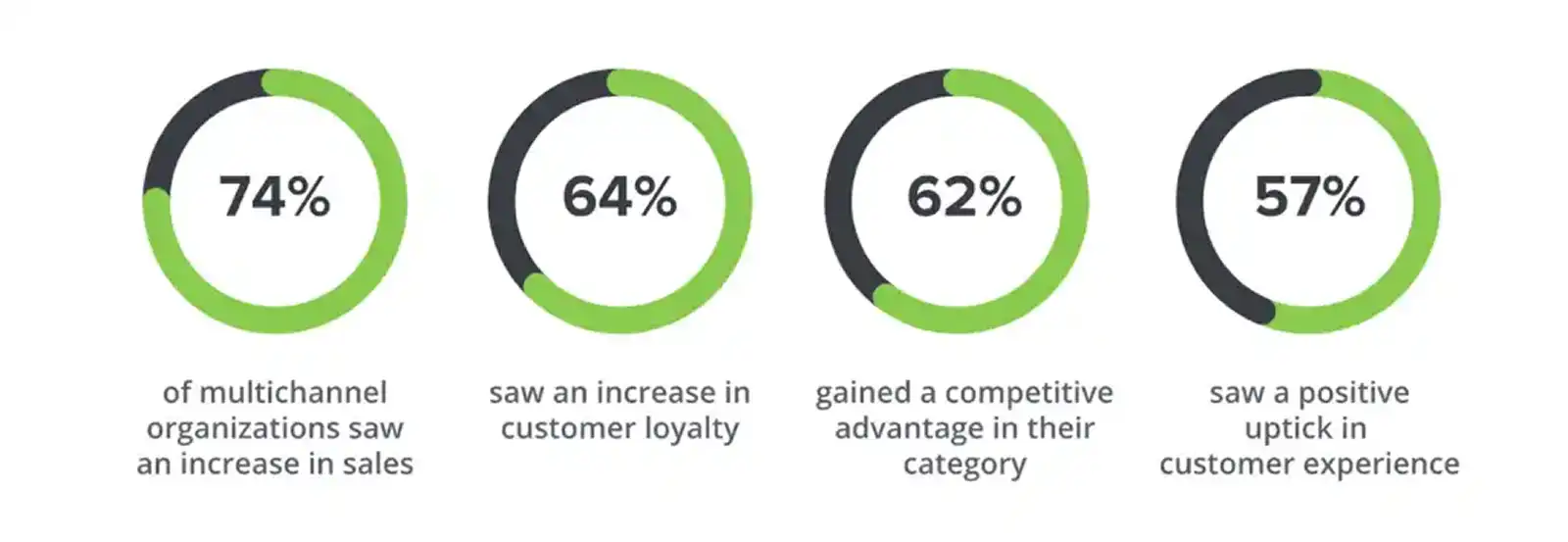
But there are several other advantages to multi-channel selling as well, which we cover in detail below.
Note: We use the terms “cross listing” and “multi-channel selling” interchangeably.
1. Testing out new markets
Cross listing can be a great way to test out new markets and see which ones are the best fit for your business.
You can experiment with different e-commerce pricing strategies and product descriptions to see what works best in each marketplace.
This can help you fine-tune your selling strategy and find the platform that gives you the most success.
Have any new products that you’ve been wanting to add to your product line, but are unsure about how well they would sell?
Multi-channel selling is a great way to experiment with this! Start by introducing your new item to a single marketplace to see how well it performs.
2. Increased visibility
When you list on multiple marketplaces, your products become more visible to potential customers. This can lead to increased traffic to your listings and, ultimately, more sales.
In fact, most shoppers need to see an item multiple times before converting and buying from you.
46.7% of sales begin with searches on online marketplaces like Amazon and Etsy as opposed to Google.
Say you sell bespoke scented candles on Shopify and a potential customer sees your ad on Instagram.
They may not click through to your Shopify store and browse further based on that one ad.
However, perhaps they also come across your products on Amazon, Etsy and Poshmark during their search.
Seeing your product multiple times across more than one platform makes your product visible and increases the odds of you making the sale.
(By the way: did you know that relisting on Shopify keeps your listings fresh and visible for potential buyers?)
3. Access to new customer segments
Today’s online shoppers are savvier than ever before. They know what they want and they have preferred platforms to shop these products on.
If you want to reach them, you need to be visible on the platforms they’re engaging with.
Each marketplace has its own unique customer base so by listing on multiple online platforms, you can reach new customers who might not otherwise find your products.
Consider social media platforms like Instagram, too. No longer reserved just for being social, they are also becoming popular sales channels.
If you have any niche items that you’ve been sitting on as well, expanding the platforms you sell on can help you sell them!
Why? Because, certain products might not sell well on some platforms, but might have a very high demand on others.
4. Increased credibility
Having your products listed on multiple marketplaces can give you a boost in credibility.
Potential customers may view you as more established and trustworthy if they see that you're selling on multiple platforms and are backed by reputable online marketplaces.
A study by DigitalCommerce found that 65% of shoppers are willing to buy from an unknown brand if they are selling via an online marketplace as opposed to their own online store.
5. Diversify your risk
When you list your products on multiple marketplaces, you safeguard your business against unforeseen issues.
Such as marketplace bans, account suspensions, payment issues, a major update affecting your traffic or business model, or platforms collapsing entirely.
If one marketplace experiences a downturn, you can rely on the others to keep your business afloat.
Let's say you only sell on Etsy and someone unfairly reports a listing. Your account could be suspended or even terminated, which could spell the end of your business.
If you were selling on Etsy, eBay and Amazon, however, you would feel the financial pinch far less than if you had all your eggs in one basket.
This diversification protects you from fluctuations in any one market.
There's a practical risk to managing inventory across multiple platforms, too: double-selling.
If an item sells on eBay but is still listed on Poshmark and Depop, you're stuck cancelling orders and dealing with unhappy buyers.
Cross listing tools like Crosslist solve this with automatic sales detection. When an item sells on one platform, it's detected and removed from all the others with autodelist.
That means you get the benefits of diversification without the inventory headaches.
6. The ability to target niche markets
When you start looking at all the online marketplaces out there for you to sell on, you'll notice many serve specific niche markets.
Here are the niches the most popular online marketplaces tend to cater for:
eBay: collectibles, sneakers, electronics, vintage items
Poshmark: fashion, plus-size clothing, designer brands
Depop: Gen Z vintage fashion and streetwear
Mercari: general secondhand goods, electronics, toys
Etsy: handmade, vintage, and craft supplies
Facebook Marketplace: local sales, furniture, home goods
WooCommerce: your own branded store for repeat customers, higher margins, and full control over pricing, branding, and customer experience
Amazon: new products, branded goods, household essentials, books, and high-demand everyday items
By listing across several platforms, you’re matching your inventory to the buyers most likely to purchase it, instead of hoping the right buyer stumbles across you on a single platform.
For example, a seller listing vintage Nike trainers could reach sneakerheads on eBay and Gen Z fashion buyers on Depop, two completely different audiences from one product.
A cross listing tool makes this possible without tripling your workload: create one listing, post it to all three, and let each marketplace's audience do the rest.
7. Piggybacking off the platform's marketing efforts
Most online marketplaces put a lot of money towards their marketing efforts. You can use this to your advantage by leveraging their credibility to boost your odds of making sales.
There are a few key things to keep in mind when trying to latch onto an online marketplace's marketing efforts:
First and foremost, it is important to understand the platform on which the marketplace operates.
What kind of users does it attract? What do they care about? What kinds of content perform well on the platform?
Answering these questions will give you a good foundation for creating your own marketing strategy that is tailored to the specific marketplace.
Secondly, take some time to study the marketplace's existing marketing efforts. What do they do well? What could be improved?
Identifying both the strong and weak points of their marketing will help you create a more effective strategy of your own.
Every seller on those platforms benefits from the spike in traffic, without spending a penny on ads.
If you're listed on both platforms when those campaigns hit, you're getting free marketing from two directions at once.
That's the kind of leverage that single-platform sellers simply don't have access to.
Automate multi-channel selling with Crosslist
Now that you understand the benefits of selling on multiple marketplaces, you might be wondering how to manage it all without spending hours creating listings and keeping inventory up to date.
That’s a completely valid question.
Luckily, there’s a solution that will make it super easy for you: automating the process using a cross listing app like Crosslist.
Cross listing is the process of using software to post your listings on multiple platforms for you.
This greatly reduces your time and effort while simultaneously increasing your sales.
Let’s say you’re using Crosslist because you want to expand your presence to 2 more marketplaces.
Create a listing on Crosslist, fill out a single form, and select all the marketplaces you want to sell on.
Crosslist's dynamic form adjusts to show only the fields each marketplace requires, no separate forms per platform.
Hit Post and the software automatically publishes your listings in the background.
List, edit, and manage your inventory from your phone with our mobile app. Source items at a car boot sale and cross list them before you leave.
When an item sells on one marketplace, Crosslist automatically detects the sale and removes the listing everywhere else with autodelist.
No double-selling, which becomes critical once you're selling on 3+ platforms.
Crosslist also helps you import your existing inventory in bulk, manage everything from a single dashboard.
You can also generate complete product listings with AI, including titles, descriptions, pricing suggestions, and enhanced photos.
It works in the US, UK, Canada, and Australia, across all major marketplaces.
This way, you don’t need to manually post your listings to each site, nor do you need to spend thrice the amount of time and effort into expanding, saving you a TON of time.
Bottom line: Crosslist is one of the best cross listing apps for resellers and helps you expand your presence and increase your revenue without increasing the amount of time you spend reselling.
For a step-by-step walkthrough, check out our guide on how to list on multiple platforms.
Or if you're ready to dive in, try Crosslist risk-free with our 3-day money-back guarantee.
From reaching new customer segments to listing and selling on multiple e-commerce marketplaces can be a boon for your business.
The major upside to multi-channel selling is that it can skyrocket your sales — especially if you find that you’ve hit a plateau.
In fact, listing on at least 3 marketplaces could bring in a whopping 156% more sales than if you’re listing on only one marketplace. Ready to learn more? Read on!
Key takeaways
Selling on 3+ marketplaces can increase your sales by up to 156% compared to selling on just one platform.
More platforms = more visibility: most buyers need to see a product multiple times before purchasing.
Diversification protects your business, if one marketplace suspends your account or changes policies, you're not wiped out.
Different marketplaces attract different buyers, and matching your products to the right platform increases your chances of selling.
A cross listing app automates the process, so expanding doesn’t mean doubling your workload.
7 benefits of cross listing your inventory across multiple channels
There are many reasons to list and sell your products on several online marketplaces as opposed to a single sales channel.
Perhaps the most obvious reason is to reach a larger audience and increase sales. In fact, 74% of sellers who use more than one sales channel see a definite increase in sales.
But there are several other advantages to multi-channel selling as well, which we cover in detail below.
Note: We use the terms “cross listing” and “multi-channel selling” interchangeably.
1. Testing out new markets
Cross listing can be a great way to test out new markets and see which ones are the best fit for your business.
You can experiment with different e-commerce pricing strategies and product descriptions to see what works best in each marketplace.
This can help you fine-tune your selling strategy and find the platform that gives you the most success.
Have any new products that you’ve been wanting to add to your product line, but are unsure about how well they would sell?
Multi-channel selling is a great way to experiment with this! Start by introducing your new item to a single marketplace to see how well it performs.
2. Increased visibility
When you list on multiple marketplaces, your products become more visible to potential customers. This can lead to increased traffic to your listings and, ultimately, more sales.
In fact, most shoppers need to see an item multiple times before converting and buying from you.
46.7% of sales begin with searches on online marketplaces like Amazon and Etsy as opposed to Google.
Say you sell bespoke scented candles on Shopify and a potential customer sees your ad on Instagram.
They may not click through to your Shopify store and browse further based on that one ad.
However, perhaps they also come across your products on Amazon, Etsy and Poshmark during their search.
Seeing your product multiple times across more than one platform makes your product visible and increases the odds of you making the sale.
(By the way: did you know that relisting on Shopify keeps your listings fresh and visible for potential buyers?)
3. Access to new customer segments
Today’s online shoppers are savvier than ever before. They know what they want and they have preferred platforms to shop these products on.
If you want to reach them, you need to be visible on the platforms they’re engaging with.
Each marketplace has its own unique customer base so by listing on multiple online platforms, you can reach new customers who might not otherwise find your products.
Consider social media platforms like Instagram, too. No longer reserved just for being social, they are also becoming popular sales channels.
If you have any niche items that you’ve been sitting on as well, expanding the platforms you sell on can help you sell them!
Why? Because, certain products might not sell well on some platforms, but might have a very high demand on others.
4. Increased credibility
Having your products listed on multiple marketplaces can give you a boost in credibility.
Potential customers may view you as more established and trustworthy if they see that you're selling on multiple platforms and are backed by reputable online marketplaces.
A study by DigitalCommerce found that 65% of shoppers are willing to buy from an unknown brand if they are selling via an online marketplace as opposed to their own online store.
5. Diversify your risk
When you list your products on multiple marketplaces, you safeguard your business against unforeseen issues.
Such as marketplace bans, account suspensions, payment issues, a major update affecting your traffic or business model, or platforms collapsing entirely.
If one marketplace experiences a downturn, you can rely on the others to keep your business afloat.
Let's say you only sell on Etsy and someone unfairly reports a listing. Your account could be suspended or even terminated, which could spell the end of your business.
If you were selling on Etsy, eBay and Amazon, however, you would feel the financial pinch far less than if you had all your eggs in one basket.
This diversification protects you from fluctuations in any one market.
There's a practical risk to managing inventory across multiple platforms, too: double-selling.
If an item sells on eBay but is still listed on Poshmark and Depop, you're stuck cancelling orders and dealing with unhappy buyers.
Cross listing tools like Crosslist solve this with automatic sales detection. When an item sells on one platform, it's detected and removed from all the others with autodelist.
That means you get the benefits of diversification without the inventory headaches.
6. The ability to target niche markets
When you start looking at all the online marketplaces out there for you to sell on, you'll notice many serve specific niche markets.
Here are the niches the most popular online marketplaces tend to cater for:
eBay: collectibles, sneakers, electronics, vintage items
Poshmark: fashion, plus-size clothing, designer brands
Depop: Gen Z vintage fashion and streetwear
Mercari: general secondhand goods, electronics, toys
Etsy: handmade, vintage, and craft supplies
Facebook Marketplace: local sales, furniture, home goods
WooCommerce: your own branded store for repeat customers, higher margins, and full control over pricing, branding, and customer experience
Amazon: new products, branded goods, household essentials, books, and high-demand everyday items
By listing across several platforms, you’re matching your inventory to the buyers most likely to purchase it, instead of hoping the right buyer stumbles across you on a single platform.
For example, a seller listing vintage Nike trainers could reach sneakerheads on eBay and Gen Z fashion buyers on Depop, two completely different audiences from one product.
A cross listing tool makes this possible without tripling your workload: create one listing, post it to all three, and let each marketplace's audience do the rest.
7. Piggybacking off the platform's marketing efforts
Most online marketplaces put a lot of money towards their marketing efforts. You can use this to your advantage by leveraging their credibility to boost your odds of making sales.
There are a few key things to keep in mind when trying to latch onto an online marketplace's marketing efforts:
First and foremost, it is important to understand the platform on which the marketplace operates.
What kind of users does it attract? What do they care about? What kinds of content perform well on the platform?
Answering these questions will give you a good foundation for creating your own marketing strategy that is tailored to the specific marketplace.
Secondly, take some time to study the marketplace's existing marketing efforts. What do they do well? What could be improved?
Identifying both the strong and weak points of their marketing will help you create a more effective strategy of your own.
Every seller on those platforms benefits from the spike in traffic, without spending a penny on ads.
If you're listed on both platforms when those campaigns hit, you're getting free marketing from two directions at once.
That's the kind of leverage that single-platform sellers simply don't have access to.
Automate multi-channel selling with Crosslist
Now that you understand the benefits of selling on multiple marketplaces, you might be wondering how to manage it all without spending hours creating listings and keeping inventory up to date.
That’s a completely valid question.
Luckily, there’s a solution that will make it super easy for you: automating the process using a cross listing app like Crosslist.
Cross listing is the process of using software to post your listings on multiple platforms for you.
This greatly reduces your time and effort while simultaneously increasing your sales.
Let’s say you’re using Crosslist because you want to expand your presence to 2 more marketplaces.
Create a listing on Crosslist, fill out a single form, and select all the marketplaces you want to sell on.
Crosslist's dynamic form adjusts to show only the fields each marketplace requires, no separate forms per platform.
Hit Post and the software automatically publishes your listings in the background.
List, edit, and manage your inventory from your phone with our mobile app. Source items at a car boot sale and cross list them before you leave.
When an item sells on one marketplace, Crosslist automatically detects the sale and removes the listing everywhere else with autodelist.
No double-selling, which becomes critical once you're selling on 3+ platforms.
Crosslist also helps you import your existing inventory in bulk, manage everything from a single dashboard.
You can also generate complete product listings with AI, including titles, descriptions, pricing suggestions, and enhanced photos.
It works in the US, UK, Canada, and Australia, across all major marketplaces.
This way, you don’t need to manually post your listings to each site, nor do you need to spend thrice the amount of time and effort into expanding, saving you a TON of time.
Bottom line: Crosslist is one of the best cross listing apps for resellers and helps you expand your presence and increase your revenue without increasing the amount of time you spend reselling.
For a step-by-step walkthrough, check out our guide on how to list on multiple platforms.
Or if you're ready to dive in, try Crosslist risk-free with our 3-day money-back guarantee.
From reaching new customer segments to listing and selling on multiple e-commerce marketplaces can be a boon for your business.
The major upside to multi-channel selling is that it can skyrocket your sales — especially if you find that you’ve hit a plateau.
In fact, listing on at least 3 marketplaces could bring in a whopping 156% more sales than if you’re listing on only one marketplace. Ready to learn more? Read on!
Key takeaways
Selling on 3+ marketplaces can increase your sales by up to 156% compared to selling on just one platform.
More platforms = more visibility: most buyers need to see a product multiple times before purchasing.
Diversification protects your business, if one marketplace suspends your account or changes policies, you're not wiped out.
Different marketplaces attract different buyers, and matching your products to the right platform increases your chances of selling.
A cross listing app automates the process, so expanding doesn’t mean doubling your workload.
7 benefits of cross listing your inventory across multiple channels
There are many reasons to list and sell your products on several online marketplaces as opposed to a single sales channel.
Perhaps the most obvious reason is to reach a larger audience and increase sales. In fact, 74% of sellers who use more than one sales channel see a definite increase in sales.
But there are several other advantages to multi-channel selling as well, which we cover in detail below.
Note: We use the terms “cross listing” and “multi-channel selling” interchangeably.
1. Testing out new markets
Cross listing can be a great way to test out new markets and see which ones are the best fit for your business.
You can experiment with different e-commerce pricing strategies and product descriptions to see what works best in each marketplace.
This can help you fine-tune your selling strategy and find the platform that gives you the most success.
Have any new products that you’ve been wanting to add to your product line, but are unsure about how well they would sell?
Multi-channel selling is a great way to experiment with this! Start by introducing your new item to a single marketplace to see how well it performs.
2. Increased visibility
When you list on multiple marketplaces, your products become more visible to potential customers. This can lead to increased traffic to your listings and, ultimately, more sales.
In fact, most shoppers need to see an item multiple times before converting and buying from you.
46.7% of sales begin with searches on online marketplaces like Amazon and Etsy as opposed to Google.
Say you sell bespoke scented candles on Shopify and a potential customer sees your ad on Instagram.
They may not click through to your Shopify store and browse further based on that one ad.
However, perhaps they also come across your products on Amazon, Etsy and Poshmark during their search.
Seeing your product multiple times across more than one platform makes your product visible and increases the odds of you making the sale.
(By the way: did you know that relisting on Shopify keeps your listings fresh and visible for potential buyers?)
3. Access to new customer segments
Today’s online shoppers are savvier than ever before. They know what they want and they have preferred platforms to shop these products on.
If you want to reach them, you need to be visible on the platforms they’re engaging with.
Each marketplace has its own unique customer base so by listing on multiple online platforms, you can reach new customers who might not otherwise find your products.
Consider social media platforms like Instagram, too. No longer reserved just for being social, they are also becoming popular sales channels.
If you have any niche items that you’ve been sitting on as well, expanding the platforms you sell on can help you sell them!
Why? Because, certain products might not sell well on some platforms, but might have a very high demand on others.
4. Increased credibility
Having your products listed on multiple marketplaces can give you a boost in credibility.
Potential customers may view you as more established and trustworthy if they see that you're selling on multiple platforms and are backed by reputable online marketplaces.
A study by DigitalCommerce found that 65% of shoppers are willing to buy from an unknown brand if they are selling via an online marketplace as opposed to their own online store.
5. Diversify your risk
When you list your products on multiple marketplaces, you safeguard your business against unforeseen issues.
Such as marketplace bans, account suspensions, payment issues, a major update affecting your traffic or business model, or platforms collapsing entirely.
If one marketplace experiences a downturn, you can rely on the others to keep your business afloat.
Let's say you only sell on Etsy and someone unfairly reports a listing. Your account could be suspended or even terminated, which could spell the end of your business.
If you were selling on Etsy, eBay and Amazon, however, you would feel the financial pinch far less than if you had all your eggs in one basket.
This diversification protects you from fluctuations in any one market.
There's a practical risk to managing inventory across multiple platforms, too: double-selling.
If an item sells on eBay but is still listed on Poshmark and Depop, you're stuck cancelling orders and dealing with unhappy buyers.
Cross listing tools like Crosslist solve this with automatic sales detection. When an item sells on one platform, it's detected and removed from all the others with autodelist.
That means you get the benefits of diversification without the inventory headaches.
6. The ability to target niche markets
When you start looking at all the online marketplaces out there for you to sell on, you'll notice many serve specific niche markets.
Here are the niches the most popular online marketplaces tend to cater for:
eBay: collectibles, sneakers, electronics, vintage items
Poshmark: fashion, plus-size clothing, designer brands
Depop: Gen Z vintage fashion and streetwear
Mercari: general secondhand goods, electronics, toys
Etsy: handmade, vintage, and craft supplies
Facebook Marketplace: local sales, furniture, home goods
WooCommerce: your own branded store for repeat customers, higher margins, and full control over pricing, branding, and customer experience
Amazon: new products, branded goods, household essentials, books, and high-demand everyday items
By listing across several platforms, you’re matching your inventory to the buyers most likely to purchase it, instead of hoping the right buyer stumbles across you on a single platform.
For example, a seller listing vintage Nike trainers could reach sneakerheads on eBay and Gen Z fashion buyers on Depop, two completely different audiences from one product.
A cross listing tool makes this possible without tripling your workload: create one listing, post it to all three, and let each marketplace's audience do the rest.
7. Piggybacking off the platform's marketing efforts
Most online marketplaces put a lot of money towards their marketing efforts. You can use this to your advantage by leveraging their credibility to boost your odds of making sales.
There are a few key things to keep in mind when trying to latch onto an online marketplace's marketing efforts:
First and foremost, it is important to understand the platform on which the marketplace operates.
What kind of users does it attract? What do they care about? What kinds of content perform well on the platform?
Answering these questions will give you a good foundation for creating your own marketing strategy that is tailored to the specific marketplace.
Secondly, take some time to study the marketplace's existing marketing efforts. What do they do well? What could be improved?
Identifying both the strong and weak points of their marketing will help you create a more effective strategy of your own.
Every seller on those platforms benefits from the spike in traffic, without spending a penny on ads.
If you're listed on both platforms when those campaigns hit, you're getting free marketing from two directions at once.
That's the kind of leverage that single-platform sellers simply don't have access to.
Automate multi-channel selling with Crosslist
Now that you understand the benefits of selling on multiple marketplaces, you might be wondering how to manage it all without spending hours creating listings and keeping inventory up to date.
That’s a completely valid question.
Luckily, there’s a solution that will make it super easy for you: automating the process using a cross listing app like Crosslist.
Cross listing is the process of using software to post your listings on multiple platforms for you.
This greatly reduces your time and effort while simultaneously increasing your sales.
Let’s say you’re using Crosslist because you want to expand your presence to 2 more marketplaces.
Create a listing on Crosslist, fill out a single form, and select all the marketplaces you want to sell on.
Crosslist's dynamic form adjusts to show only the fields each marketplace requires, no separate forms per platform.
Hit Post and the software automatically publishes your listings in the background.
List, edit, and manage your inventory from your phone with our mobile app. Source items at a car boot sale and cross list them before you leave.
When an item sells on one marketplace, Crosslist automatically detects the sale and removes the listing everywhere else with autodelist.
No double-selling, which becomes critical once you're selling on 3+ platforms.
Crosslist also helps you import your existing inventory in bulk, manage everything from a single dashboard.
You can also generate complete product listings with AI, including titles, descriptions, pricing suggestions, and enhanced photos.
It works in the US, UK, Canada, and Australia, across all major marketplaces.
This way, you don’t need to manually post your listings to each site, nor do you need to spend thrice the amount of time and effort into expanding, saving you a TON of time.
Bottom line: Crosslist is one of the best cross listing apps for resellers and helps you expand your presence and increase your revenue without increasing the amount of time you spend reselling.
For a step-by-step walkthrough, check out our guide on how to list on multiple platforms.
Or if you're ready to dive in, try Crosslist risk-free with our 3-day money-back guarantee.
From reaching new customer segments to listing and selling on multiple e-commerce marketplaces can be a boon for your business.
The major upside to multi-channel selling is that it can skyrocket your sales — especially if you find that you’ve hit a plateau.
In fact, listing on at least 3 marketplaces could bring in a whopping 156% more sales than if you’re listing on only one marketplace. Ready to learn more? Read on!
Key takeaways
Selling on 3+ marketplaces can increase your sales by up to 156% compared to selling on just one platform.
More platforms = more visibility: most buyers need to see a product multiple times before purchasing.
Diversification protects your business, if one marketplace suspends your account or changes policies, you're not wiped out.
Different marketplaces attract different buyers, and matching your products to the right platform increases your chances of selling.
A cross listing app automates the process, so expanding doesn’t mean doubling your workload.
7 benefits of cross listing your inventory across multiple channels
There are many reasons to list and sell your products on several online marketplaces as opposed to a single sales channel.
Perhaps the most obvious reason is to reach a larger audience and increase sales. In fact, 74% of sellers who use more than one sales channel see a definite increase in sales.
But there are several other advantages to multi-channel selling as well, which we cover in detail below.
Note: We use the terms “cross listing” and “multi-channel selling” interchangeably.
1. Testing out new markets
Cross listing can be a great way to test out new markets and see which ones are the best fit for your business.
You can experiment with different e-commerce pricing strategies and product descriptions to see what works best in each marketplace.
This can help you fine-tune your selling strategy and find the platform that gives you the most success.
Have any new products that you’ve been wanting to add to your product line, but are unsure about how well they would sell?
Multi-channel selling is a great way to experiment with this! Start by introducing your new item to a single marketplace to see how well it performs.
2. Increased visibility
When you list on multiple marketplaces, your products become more visible to potential customers. This can lead to increased traffic to your listings and, ultimately, more sales.
In fact, most shoppers need to see an item multiple times before converting and buying from you.
46.7% of sales begin with searches on online marketplaces like Amazon and Etsy as opposed to Google.
Say you sell bespoke scented candles on Shopify and a potential customer sees your ad on Instagram.
They may not click through to your Shopify store and browse further based on that one ad.
However, perhaps they also come across your products on Amazon, Etsy and Poshmark during their search.
Seeing your product multiple times across more than one platform makes your product visible and increases the odds of you making the sale.
(By the way: did you know that relisting on Shopify keeps your listings fresh and visible for potential buyers?)
3. Access to new customer segments
Today’s online shoppers are savvier than ever before. They know what they want and they have preferred platforms to shop these products on.
If you want to reach them, you need to be visible on the platforms they’re engaging with.
Each marketplace has its own unique customer base so by listing on multiple online platforms, you can reach new customers who might not otherwise find your products.
Consider social media platforms like Instagram, too. No longer reserved just for being social, they are also becoming popular sales channels.
If you have any niche items that you’ve been sitting on as well, expanding the platforms you sell on can help you sell them!
Why? Because, certain products might not sell well on some platforms, but might have a very high demand on others.
4. Increased credibility
Having your products listed on multiple marketplaces can give you a boost in credibility.
Potential customers may view you as more established and trustworthy if they see that you're selling on multiple platforms and are backed by reputable online marketplaces.
A study by DigitalCommerce found that 65% of shoppers are willing to buy from an unknown brand if they are selling via an online marketplace as opposed to their own online store.
5. Diversify your risk
When you list your products on multiple marketplaces, you safeguard your business against unforeseen issues.
Such as marketplace bans, account suspensions, payment issues, a major update affecting your traffic or business model, or platforms collapsing entirely.
If one marketplace experiences a downturn, you can rely on the others to keep your business afloat.
Let's say you only sell on Etsy and someone unfairly reports a listing. Your account could be suspended or even terminated, which could spell the end of your business.
If you were selling on Etsy, eBay and Amazon, however, you would feel the financial pinch far less than if you had all your eggs in one basket.
This diversification protects you from fluctuations in any one market.
There's a practical risk to managing inventory across multiple platforms, too: double-selling.
If an item sells on eBay but is still listed on Poshmark and Depop, you're stuck cancelling orders and dealing with unhappy buyers.
Cross listing tools like Crosslist solve this with automatic sales detection. When an item sells on one platform, it's detected and removed from all the others with autodelist.
That means you get the benefits of diversification without the inventory headaches.
6. The ability to target niche markets
When you start looking at all the online marketplaces out there for you to sell on, you'll notice many serve specific niche markets.
Here are the niches the most popular online marketplaces tend to cater for:
eBay: collectibles, sneakers, electronics, vintage items
Poshmark: fashion, plus-size clothing, designer brands
Depop: Gen Z vintage fashion and streetwear
Mercari: general secondhand goods, electronics, toys
Etsy: handmade, vintage, and craft supplies
Facebook Marketplace: local sales, furniture, home goods
WooCommerce: your own branded store for repeat customers, higher margins, and full control over pricing, branding, and customer experience
Amazon: new products, branded goods, household essentials, books, and high-demand everyday items
By listing across several platforms, you’re matching your inventory to the buyers most likely to purchase it, instead of hoping the right buyer stumbles across you on a single platform.
For example, a seller listing vintage Nike trainers could reach sneakerheads on eBay and Gen Z fashion buyers on Depop, two completely different audiences from one product.
A cross listing tool makes this possible without tripling your workload: create one listing, post it to all three, and let each marketplace's audience do the rest.
7. Piggybacking off the platform's marketing efforts
Most online marketplaces put a lot of money towards their marketing efforts. You can use this to your advantage by leveraging their credibility to boost your odds of making sales.
There are a few key things to keep in mind when trying to latch onto an online marketplace's marketing efforts:
First and foremost, it is important to understand the platform on which the marketplace operates.
What kind of users does it attract? What do they care about? What kinds of content perform well on the platform?
Answering these questions will give you a good foundation for creating your own marketing strategy that is tailored to the specific marketplace.
Secondly, take some time to study the marketplace's existing marketing efforts. What do they do well? What could be improved?
Identifying both the strong and weak points of their marketing will help you create a more effective strategy of your own.
Every seller on those platforms benefits from the spike in traffic, without spending a penny on ads.
If you're listed on both platforms when those campaigns hit, you're getting free marketing from two directions at once.
That's the kind of leverage that single-platform sellers simply don't have access to.
Automate multi-channel selling with Crosslist
Now that you understand the benefits of selling on multiple marketplaces, you might be wondering how to manage it all without spending hours creating listings and keeping inventory up to date.
That’s a completely valid question.
Luckily, there’s a solution that will make it super easy for you: automating the process using a cross listing app like Crosslist.
Cross listing is the process of using software to post your listings on multiple platforms for you.
This greatly reduces your time and effort while simultaneously increasing your sales.
Let’s say you’re using Crosslist because you want to expand your presence to 2 more marketplaces.
Create a listing on Crosslist, fill out a single form, and select all the marketplaces you want to sell on.
Crosslist's dynamic form adjusts to show only the fields each marketplace requires, no separate forms per platform.
Hit Post and the software automatically publishes your listings in the background.
List, edit, and manage your inventory from your phone with our mobile app. Source items at a car boot sale and cross list them before you leave.
When an item sells on one marketplace, Crosslist automatically detects the sale and removes the listing everywhere else with autodelist.
No double-selling, which becomes critical once you're selling on 3+ platforms.
Crosslist also helps you import your existing inventory in bulk, manage everything from a single dashboard.
You can also generate complete product listings with AI, including titles, descriptions, pricing suggestions, and enhanced photos.
It works in the US, UK, Canada, and Australia, across all major marketplaces.
This way, you don’t need to manually post your listings to each site, nor do you need to spend thrice the amount of time and effort into expanding, saving you a TON of time.
Bottom line: Crosslist is one of the best cross listing apps for resellers and helps you expand your presence and increase your revenue without increasing the amount of time you spend reselling.
For a step-by-step walkthrough, check out our guide on how to list on multiple platforms.
Or if you're ready to dive in, try Crosslist risk-free with our 3-day money-back guarantee.